

Impact Summit 2026: AI Innovation Takes Centre Stage in Delhi
The India AI Impact Summit 2026 concluded in New Delhi with 88 nations adopting the New Delhi Declaration and over $250 billion pledged for AI infrastructure; in this synopsis Razia Sanwari explores key innovations, global commitments and India’s AI vision


Feb 22, 2026 - The India AI Impact Summit 2026 wrapped up in New Delhi at the Bharat Mandapam after drawing delegations from more than 80 countries and tens of thousands of global tech leaders, policymakers and innovators. The five-day India Summit from February 16 to 20, has emerged as a major global forum on artificial intelligence (AI), blending technology policy with investment and international cooperation. Significant commitments from global and Indian tech giants were announced; top AI executives and policymakers agreed on responsible and inclusive AI development. A strong focus remained on reducing global digital divide and supporting ethical AI use.
The theme of the event was guided by the principle Sarvajan Hitaya, Sarvajan Sukhaya (welfare for all). India emphasised the democratising of AI to benefit all sections of society, not just early adopters or corporations. Discussions highlighted making AI all inclusive - across healthcare, agriculture, education and governance - to improve efficiency, policy planning and public services.
NEW DELHI DECLARATION
Leaders of 88 countries and organisations adopted the New Delhi Declaration on February 21. This was a landmark agreement to advance responsible, inclusive AI for global development. Tech giants pledged over $250 billion in infrastructure and venture commitments. Major companies announced expanded AI programmes, global investments and new collaboration initiatives to strengthen AI infrastructure, connectivity and skills training.
The Summit also underscored growing international interest. Strong European engagement and strategic deals were highlights. One such accomplishment was India joining the US-led tech alliance Pax Silica.
While widely touted as a success in democratising AI and shaping global cooperation, the Summit also saw political protests and logistical challenges reported during the week, including a demonstration by Youth Congress activists inside the venue. The Galgotias University incident threatened to throw a shadow over the success of the event. A professor from the institution displayed a robotic dog at the Summit claiming it to be in-house developed product. It was found to actually be a product of China’s Unitree Robotics.
The event, however, showcased several other homegrown AI models, fascinating products and innovations that caught the visitors’ attention. These included AI innovations directly connected to education, daily life and safety. Smart bikes, AI-based grievance systems, smart shoes, digital evaluation platforms and virtual reality innovations were among major attractions.
Here are brief details of some of the innovations that stood out at the Summit:
Smart Shoes
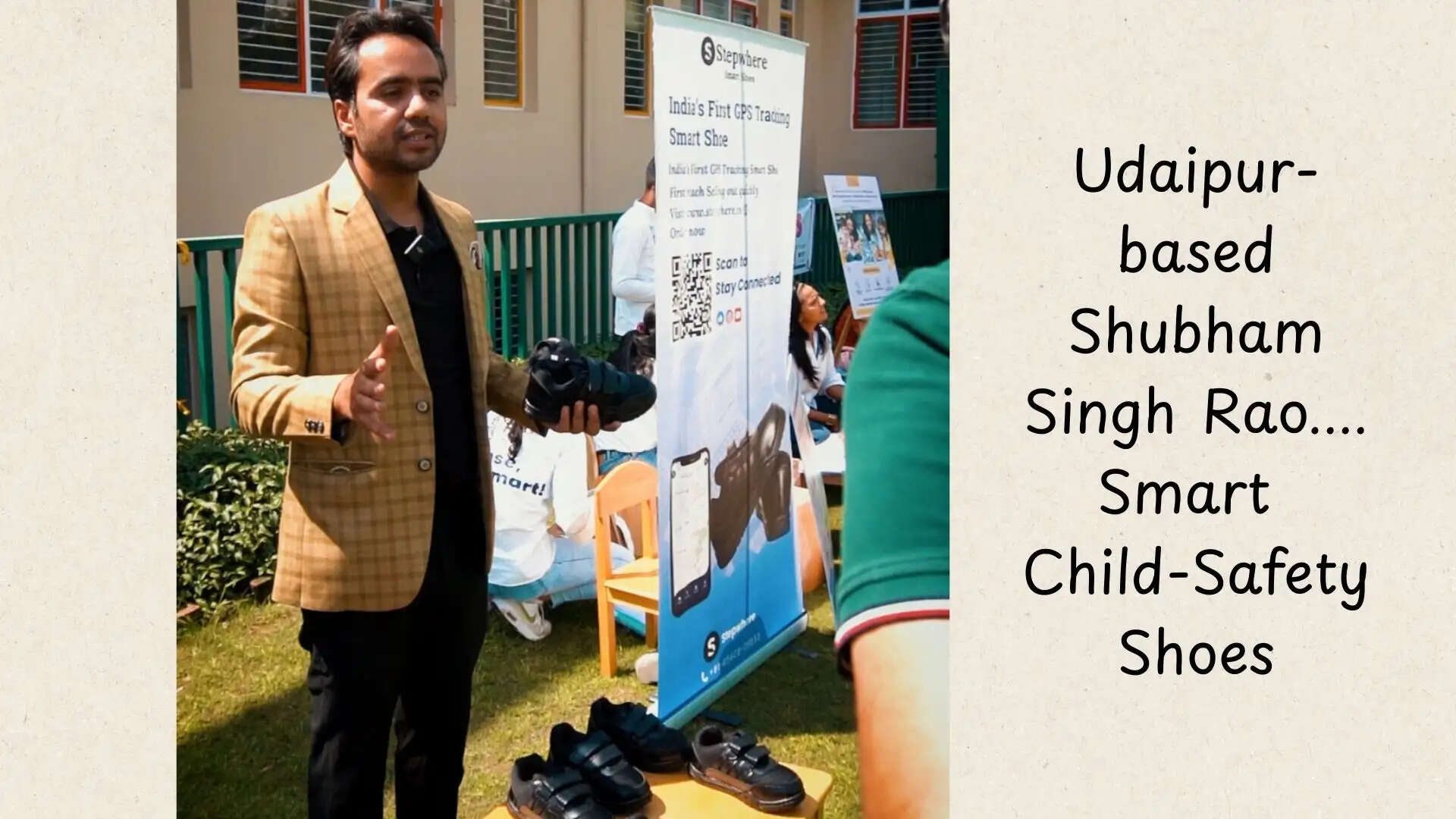
The smart shoes for child safety from the Jaipur-based Stepwear particularly stood out for its inventiveness. It impressed for it specifically addresses the concerns involving child safety and providing peace of mind to parents. Founder of this technology start-up is Udaipur-based Shubham Singh Rao whose vision led him to work on this project for two years and come up with a product that enables parents to monitor their children’s safety and daily activities. His team developed smart shoes for children aged 5 to 15 years which offer live location tracking, step counting and geo-fencing capabilities. Priced at just Rs 2,200 to ensure affordability for as many families as possible, the shoes include a built-in GPS tracker that provides real-time location updates. With geo-fencing features, parents receive alerts on their phones if the child moves beyond a predefined safe zone. The mobile app allows parents to view location history and notifications.
AI Grievance System
Another smart innovation showcased at the Summit was an AI-based grievance system called Bharat Jan Sevak developed to help simplify complaint registration processes - from the Panchayat level to the Central Government. AI-powered text analysis identifies the category of the complaint — such as electricity, roads, healthcare or education — and then offers information about the relevant department.
Digital Assistant Robot
An interactive digital assistant robot named Jeevan by Bharti Airtel attracted much attention. Equipped with an auto-navigation system, the robot can independently choose routes, identify emotions and provide real-time responses.
Radar Safety Bike
Bengaluru-based EV manufacturer Ultraviolette Automotive presented an AI-enabled radar safety electric sports bike which warns riders in advance about vehicles hidden in blind spots or around sharp turns.
Smart Loom
Tata Group showcased its AI-powered Brigital Loom which provides real-time guidance during weaving, reduces errors and increases production speed. Sarees that earlier took 10 days to produce are now completed in only six days. Weavers in Kanchipuram have already begun using it.
VR & Health AI
Era University introduced a virtual reality-based model for medical education which makes the training more practical and effective. VR headsets are worn by students to practice emergency procedures such as CPR on digital patients.
A Benchmarking Open Data Platform for Health AI (BODH) was also launched to enable secure, federated AI training and evaluation without compromising sensitive patient data.
AI Hiring
Skills Brew AI introduced an AI-powered hiring platform designed to speed up recruitment. The platform handles the entire process — from résumé shortlisting to written exams and virtual interviews. Using AI-based data analysis, it selects candidates and prepares detailed evaluation reports.
AI Evaluation
Grade Lab, entrepreneur Akshat Shah’s startup, introduced a cost-effective AI-based digital evaluation platform which claims to deliver up to 95% accuracy at a fraction of the cost. Once scanned answer sheets are uploaded, the system analyses question patterns and marking schemes to generate evaluation reports within seconds.
Road Safety
The Ministry of Road Transport and Highways announced that a fully automated AI-based system is being developed to prevent accidents caused by overspeeding. From issuing challans (traffic fines) to collecting payments, the entire process will operate without human intervention. The system will involve automatic detection of overspeeding and strict action against repeat offenders.
Overall, the Summit reflected India’s ambition to position itself as a global AI hub. Even though organisational issues and political debates continue to shape its narrative, what stood out were commitments to monitor real-world AI use, generate anonymised insights for policy research and support evidence-based governance.
The innovations presented at the AI Summit clearly indicate that technology is set to transform education, safety, employment and administrative processes in the coming years.
#IndiaAISummit2026 #ArtificialIntelligence #NewDelhiDeclaration #DigitalIndia #AIInnovation #ResponsibleAI #GlobalTech #AIForAll #BharatMandapam #UdaipurStartup #RajasthanInnovation #TechSummit2026 #FutureOfAI
