

Yoga for Women Part 1 - Managing Adolescence with Yoga
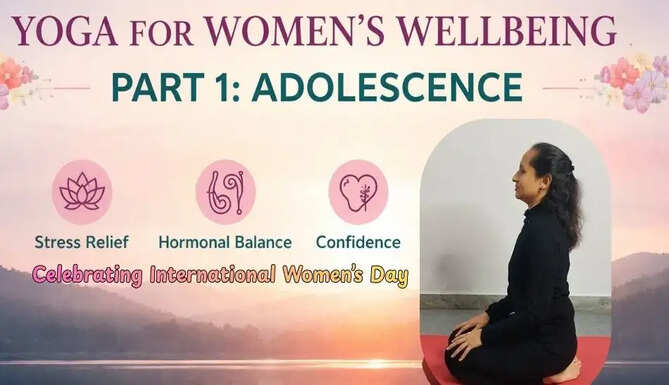
On International Women’s Day, Razia Sanwari teams up with Udaipur-based yoga therapist Sayeeda Hamid Sabir for a four-part series on yoga for women’s wellbeing; today's article focusses on adolescence - a key stage of a woman's life

Udaipur, March 8, 2026 - Today’s world demands more from women than ever before. From managing careers and families to navigating personal ambitions and social expectations, women are constantly balancing multiple roles and juggling different responsibilities. In this fast-paced reality, self-care is no longer a luxury — it has become essential.
Each year on March 8, we mark International Women’s Day by celebrating the woman’s achievements, resilience and progress towards equality. However, what we tend to ignore is the fact that true empowerment must go hand-in-hand with emotional well-being, mental balance and inner strength.
Without inner wellbeing, there is no outward strength.
Today March 8, on the occasion of International Women’s Day, UdaipurTimes presents the first part of a four-part series of articles on how a woman can achieve her inner wellbeing with the help of the ancient, holistic practice of yoga.
Our special series will explore the timeless wisdom of yoga and how it can support women’s health, vitality and emotional resilience at every stage of her life — adolescence, prenatal, postnatal, perimenopause, menopause and old age. Our articles will focus on the application of this timeless practice to help a woman overcome the challenges of all the stages — from building physical strength to nurturing a deeper sense of balance and self-awareness.
Simple yet transformative, yoga helps people reconnect with themselves and build a healthier, more balanced and more mindful way of living. It is a powerful mind-body practice which blends movement, breath control and mindfulness – strengthening the body while calming the mind. It improves flexibility, balance, posture and muscle strength, while also reducing stress and sharpening focus. More than just exercise, it is a pathway to balance and empowerment - transcending age and culture and offering physical, mental and spiritual benefits through asanas, pranayama and meditation.
In the four parts of our series, we shall focus on the following stages of a woman’s life:
- Adolescent
- Prenatal, postnatal
- Perimenopause, Menopause
- Old age
A woman’s physiology is dynamic and each of the above stages has its own dynamism.. From the first menstrual cycle to post-menopausal years, hormonal rhythms continuously shape her metabolism, mood, musculoskeletal health, cognition and emotional resilience. These biological shifts are natural, yet they often feel overwhelming without the right support system.
Udaipur-based yoga therapist Sayeeda Hamid Sabir says that yog, when applied intelligently, can serve as a preventive and therapeutic tool across all these transitions.
Our yoga expert for this four-part series, Sayeeda has 10 years plus experience in this field. Her qualifications include - Masters in Yoga, CAHS-Acupressure, UGC-NET (Yoga) qualified and Research Scholar (MLSU).
In the first part of the series, Sayeeda will explain adolescence and how yog can be applied to overcome the challenges of this stage.
Adolescence: Emotional and Physical Shift
Adolescence is a deeply transformative stage, both biologically and psychologically. During this time, a young girl often finds herself navigating exam stress and academic pressure while simultaneously dealing with body image concerns, social comparison, mood swings and a growing desire for independence. What makes this period particularly intense is brain development itself. The emotional centre of the brain matures earlier than the rational prefrontal cortex, which is responsible for decision-making and impulse control. As a result, teenagers may feel emotions more strongly and react more quickly, even when they intellectually understand a situation.
Adolescence is also a period of identity formation and heightened self-awareness. Concerns about appearance, social belonging and performance can strongly influence self-esteem. Common challenges at this stage include exam-related stress, anxiety around the onset of menstruation, menstrual pain, acne, emerging tendencies toward PCOS in susceptible individuals and fluctuating social confidence.
Anxiety and fluctuating confidence levels are frequent companions during adolescence. These emotional shifts are often intensified by excessive screen time and reduced participation in outdoor play or sports. Long hours spent on mobile phones and laptops increases social comparison and performance pressure while replacing physical activity with sedentary behaviour. Over time, this contributes to poor posture, forward-head alignment, rounded shoulders and musculoskeletal strain. The combination of reduced physical activity and prolonged sitting further affects circulation, metabolic health and overall energy levels, creating a cycle where both mind and body feel fatigued and less adaptable to stress.
How Yoga Supports
Yoga offers a structured yet gentle way to support both body and mind.
Yog asana and pranayama, help reduce stress hormones, supporting menstrual hormonal balance. Regular practice improves pelvic circulation, which may reduce menstrual discomfort. It strengthens postural muscles, counters screen-related strain and supports a balanced metabolism.
Equally important are the psychological benefits. Pranayama calms sympathetic overactivity and improves concentration, which is particularly useful during examination periods. Over time, consistent practice strengthens emotional resilience, enabling teenagers to respond thoughtfully rather than react impulsively. As body awareness improves, self-acceptance often follows. Instead of viewing the body as something to judge or compare, young girls begin to experience it as something to understand and care for.
In this way, yoga becomes more than exercise. It becomes a stabilising practice during one of life’s most sensitive transitions.
Recommended Practices
Sukshm Vyayama
- Griva Sanchalan (neck movements)
- Skandha Sanchalan (shoulder rotations)
- Paada Sanchalan (cycling)
Asanas
- Surya Namaskar (gentle rounds)
- Baddha Konasana (Butterfly Pose)
- Balasana (Child’s Pose)
- Supta Vajrasana (use props, if necessary)
- Setu Bandhasana (Bridge Pose)
Breathing
- Nadi Shodhana (Alternate Nostril Breathing)
- Bhramari Pranayama (Humming Breath)
Meditation
- Short Yoga Nidra (5–10 minutes)
WATCH VIDEO
#InternationalWomensDay #YogaForWomen #WomenWellbeing #YogaTherapy #HolisticHealth #WomenEmpowerment #YogaForTeenagers #TeenHealth #Pranayama #MentalWellbeing #HealthyLifestyle #UdaipurTimes #UdaipurNews #UdaipurLifestyle #RajasthanNews #RajasthanLifestyle #WomenHealth #MindBodyBalance #YogaForHealth #StressRelief
