


Yoga for Women Part 4: From Performance to Preservation
Continuing with our four-part series on Yoga for Women, in the final part today, Udaipur yoga therapist Sayeeda Hamid Sabir teaches simple practices for healthy ageing and long-term wellness. Discover how yoga supports strength, balance, cognition and independence in older women.
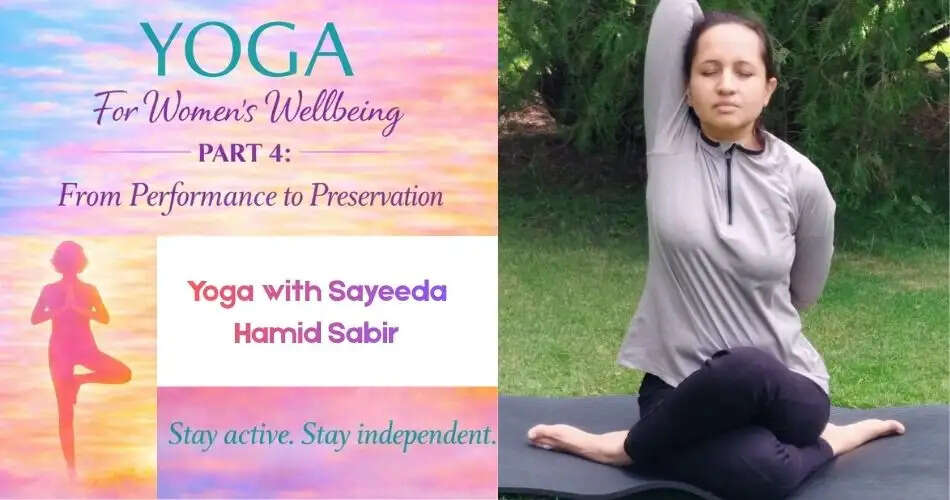
Udaipur, March 29, 2026 - Today, we present Part 4 of our International Women's Day four-part special series on Yoga for Women. The fourth and last part focusses on the phase in a woman’s life when she is transitioning into a life that signals a shift from performance to preservation. Razia Sanwari of UdaipurTimes finds out from Udaipur yoga therapist Sayeeda Hamid Sabir what are the signals the body gives when you have moved into your sixties and how you can address the vulnerabilities.
If menopause represents hormonal transition, older age represents physiological consolidation, where preservation of mobility, cognition and independence becomes the central goal.
Older Age: Preservation, Independence and Cognitive Vitality
Ageing is not merely the passage of time; it is a gradual physiological recalibration. By the time a woman enters her 60s and beyond, oestrogen levels have stabilised at a lower baseline. Muscle mass naturally declines, bone density reduces, metabolic rate slows and joint cartilage begins to thin. These changes are biological realities, but the rate at which they progress depends significantly on lifestyle.
The focus at this stage shifts from performance to preservation: preserving strength, balance, cognition, mobility and independence.
What Happens in the Body
With advancing age:
- Sarcopenia (age-related muscle loss) reduces strength and stamina.
- Bone mineral density declines increasing fracture risk.
- Joint stiffness and arthritis become more common.
- Metabolism slows further making weight maintenance challenging.
- Balance mechanisms weaken raising fall risk.
- Heart-lung fitness gradually decline without regular exercise.
Circulation may become less efficient and recovery from illness or injury takes longer.
Cognitive and Emotional Landscape
The brain can keep learning and adapting, although it may do so more slowly with age. Some women experience mild memory lapses or difficulty with multitasking. The risk of neurodegenerative conditions increases with age.
Emotionally, this stage may bring:
- Adjustment to retirement
- Changes in social roles
- Loneliness after children move away
- Grief or loss
- Concerns about dependence
At the same time, many women report greater emotional maturity, acceptance and clarity. As women age, they tend to react less impulsively or emotionally and instead respond more calmly, thoughtfully and with greater perspective.
Common Challenges
- Osteoporosis
- Arthritis
- Balance disorders
- Reduced flexibility
- Sleep disturbances
- Mild cognitive decline
- Decreased confidence in mobility
Physical inactivity accelerates these processes, creating a cycle of weakness, fear of falling and further inactivity.
How Yoga Supports Healthy Ageing
Yoga at this stage is less about intensity and more about intelligent consistency.
Physical Benefits
Sukshma Vyayama includes gentle stretching along with joint movements and breath awareness, making it more comprehensive, followed by asanas that support metabolic function.
Gentle strength-building postures help preserve muscle mass and support joint stability. Weight-bearing poses stimulate bone maintenance. Slow transitions between postures improve neuromuscular coordination.
Balance practices enhance proprioception, reducing fall risk. Controlled breathing improves oxygenation and supports cardiovascular function.
Cognitive and Nervous System Benefits
Breathing practices regulate the autonomic nervous system and reduce chronic stress, which supports cardiovascular and cognitive health.
Regular practice of Pranayama, Dharana and Dhyana improve focus, support memory and keep the mind sharp. Learning new sequences or maintaining a daily practice engages memory pathways and promotes cognitive stimulation.
Yoga Nidra and guided relaxation improve sleep quality, which is crucial for brain health.
Emotional Well-being and Independence
Movement builds confidence. When a woman feels steady on her feet and strong in her body, fear reduces. Group yoga sessions may also provide social engagement, which is protective against cognitive decline.
Yoga encourages gratitude, acceptance and inner steadiness qualities that often deepen with age.
Recommended Practices for Older Women
Sukshm Vyayama
- Griva Sanchalan (gentle neck movements)
- Skandha Sanchalan (shoulder rotations)
- Manibandha Sanchalan (wrist movements)
- Hasta Chakra (arm rotations)
- Kati Sanchalan (waist movements)
- Gulpha Sanchalan (ankle rotations and gentle stretching)
Asanas (using appropriate props for support if needed)
- Stretching Asanas
Kati Chakrasana (Waist Rotation), Ardha Kati Chakrasana (Half Waist-Wheel Pose), Marjariasana-Bitilasana (Cat–Cow), Shashankasana (Child’s Pose)
- Asanas to Improve Metabolism
Pawanmuktasana (Wind-relieving Pose), Supta Baddha Konasana (Reclined Butterfly Pose), Markatasana (Monkey Pose)
- Weight Bearing Asanas and Strength Based Asanas
Wall Push-ups, Virabhadrasana (Warrior Pose with mild variation), Bhujangasana (Cobra Pose), Ardh Paduttanasana (Raised Leg Pose), Utkatasana (Chair Pose)
- Balancing Asanas
Single-leg stance (supported), Tadasan (Mountain Pose), Parsva Balasana (Bird Dog Pose)
- Gentle Back Bends and Chest Opening Asanas
Ardh Chakrasana (Half Wheel Pose), Setu Bandhasana (Bridge Pose)
Pranayama
- Vashisht Pranayama (Diaphragmic Breathing)
- Bhastrika (under supervision)
- Anulom Vilom
- Bhramari
Meditation
- Yoga Nidra (10 -15 minutes)
- Gratitude-based meditation
*Duration: 30–40 minutes of consistent daily practice is more beneficial than occasional intense sessions.
Concluding Reflection
Across the lifespan, from adolescence to older age, a woman’s body is in continuous dialogue with hormones, environment, responsibilities and identity. Each phase brings unique strengths and vulnerabilities.
If introduced early and sustained consistently, it becomes less of a remedy and more of a lifelong ally.
Yoga does not stop change. It improves adaptation.
Through Asana, Pranayama and Dhyana, yoga supports musculoskeletal integrity, metabolic balance, emotional regulation and cognitive resilience. Most importantly, it fosters a stable inner foundation, one that remains steady even as biology evolves.
In every decade, the goal is not perfection. It is balance.
#HealthyAgeing #SeniorFitness #WomenWellness #YogaForSeniors #ActiveAgeing #MobilityMatters #CognitiveHealth #BalancedLiving #StrongAtAnyAge #GracefulAgeing #MindBodyHealth #DailyYoga
To join us on Facebook Click Here and Subscribe to UdaipurTimes Broadcast channels on GoogleNews | Telegram | Signal