

Industrial Estates, Warehousing Corridors And Water Infrastructure: Reading The Regional Construction Demand Cycle In Western India

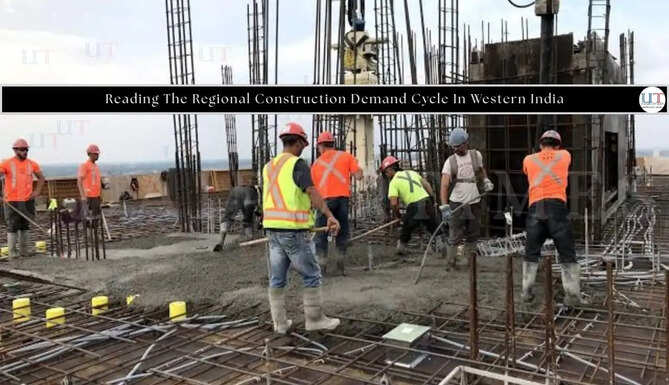
UdaipurTimes, Sept 10, 2026 | Construction and Infra Blog: Construction demand is intensely local. A contractor's fortunes depend far less on national GDP growth than on what is being built within a few hundred kilometres of its equipment yard. That geographic reality is central to understanding companies such as the one behind the lcc projects ipo, and Udaipur Times readers watching western India's industrial expansion will recognise the pattern in their own surroundings.
Why Contractors Stay Close To Home
Construction is unusual among industries in how strongly it rewards regional density. The reasons are entirely practical:
- Equipment mobilisation across long distances is expensive and slow
- Skilled labour pools are locally cultivated and locally retained
- Material supply relationships with quarries, batching plants and steel dealers are regional
- Approval knowledge — municipal, pollution control, labour compliance — is state-specific
- Client relationships develop through repeated local delivery
A contractor with five active sites within a two-hour radius can share equipment, transfer supervisors between projects and respond to problems the same day. The same contractor operating five sites across five states loses all of those efficiencies simultaneously.
The Four Demand Streams
Regional industrial construction typically draws on several distinct sources of work, each with its own rhythm:
- Private industrial capex — factories, processing units, expansions of existing plants
- Warehousing and logistics — driven by organised retail, e-commerce and tax-regime-driven consolidation of distribution networks
- Public infrastructure — water supply schemes, drainage, roads, civic buildings
- Institutional construction — educational campuses, healthcare facilities, commercial complexes
These streams do not move together, which is precisely what makes exposure to several of them valuable. Private capex weakens during economic uncertainty exactly when government infrastructure spending is often being pushed upward to compensate. Investors reviewing the upcoming ipo pipeline for construction names frequently look for the headline order value first, when the composition of that order book across these categories usually tells the more useful story.
What Drives Western India's Pipeline
Several structural factors sustain construction demand across Gujarat, Rajasthan and neighbouring states:
Industrial policy and estates. Dedicated industrial parks with pre-built infrastructure attract manufacturers who then require facility construction — a compounding effect where infrastructure creates demand for more infrastructure.
Chemical and pharmaceutical clusters. These require specialised construction: effluent treatment infrastructure, hazardous material handling zones, cleanroom-adjacent civil work. Specialised capability commands better margins than generic civil work.
Logistics corridors. Freight corridor development and highway expansion shift warehousing demand toward specific nodes, generating clusters of large-format construction.
Water infrastructure. Semi-arid regions invest continuously in supply schemes, storage and distribution networks — steady, largely government-funded work that continues through private-sector downturns.
The Specialisation Question
Contractors face a genuine strategic choice. Generalists bid on anything and compete purely on price, which keeps utilisation high but margins thin. Specialists develop capability in particular structure types — industrial sheds, process plant civil work, water retaining structures — and face fewer qualified competitors.
Specialisation carries its own risk: when that specific demand category slows, there is nowhere obvious to redeploy. The most resilient regional players tend to hold a core specialisation while retaining enough general capability to keep equipment and crews occupied through soft periods.
Signals Worth Watching
Anyone tracking regional construction demand can follow reasonably visible indicators — state industrial policy announcements and land allotment activity in industrial estates, tender flow from municipal and water supply authorities, cement and steel consumption trends in the region, and expansion announcements by anchor manufacturers whose facilities pull supplier factories into the same area.
None of these predict any individual company's results. What they do is describe the size of the pond in which regional contractors are fishing. In an industry where relocating operations is expensive and relationships take a decade to build, the health of that pond matters more than almost anything a contractor can control on its own.
Disclaimer:This Post is not written or produced by UdaipurTimes writers/journalists. UdaipurTimes follows ASCI guidelines for Online Advertising. The information may involve financial or health risk and UdaipurTimes does not endorse or promote any claims made in this post.
