

The Forces That Quietly Push Gold Prices Up and Down Across India!

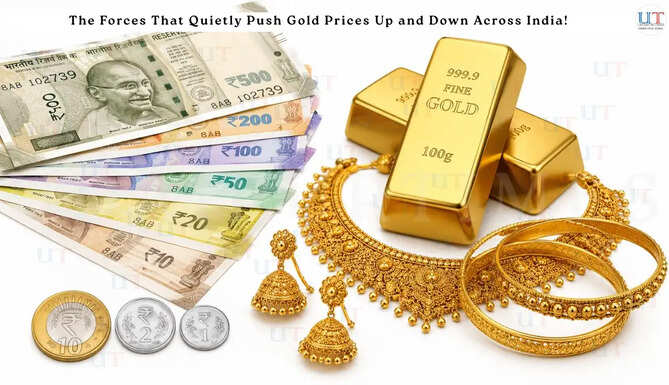
Udaipur, July 15, 2026 | Gold Prices Explainer: Gold has always held a special place in Indian households. It is bought during festivals, weddings, and family celebrations, while many investors also see it as a way to diversify their portfolios. Yet, anyone who tracks gold prices regularly will notice that they rarely stay the same for long. The price quoted today may be different tomorrow, even if there hasn't been any major local event.
These daily movements are influenced by several factors, which include global and domestic factors as well. Understanding what drives gold prices can help investors make better decisions instead of reacting to short-term fluctuations.
Global gold prices
Gold is an internationally traded commodity. Hence, global supply and demand are the major and primary forces behind deciding the base price of Gold. When international demand for gold increases or supply becomes tighter, global prices generally rise. Since India imports a large portion of its gold, these changes are eventually reflected in domestic prices.
For example, if the uncertainty in the global market increases, investors across the world usually diversify their portfolio by purchasing gold. This increases the demand and can push prices upward, affecting both international and Indian markets.
The value of the Indian rupee
Gold is globally traded in US dollars. Hence, the exchange rate between the Indian rupee and the US dollar is the second major factor which determines the price of gold in India. Any currency movements between the Indian rupee and the US dollar directly affect import costs.
A weaker rupee against the dollar will mean costlier gold imports. This results in higher domestic prices even if global gold prices remain unchanged. If the rupee strengthens against the US dollar, then the Indian gold prices may drop slightly.
Inflation and interest rates influence investor behaviour
Gold is usually viewed as a store of value during periods of rising inflation. When the purchasing power of money declines, investors prefer allocating a portion of their savings to assets like gold.
Interest rates also affect gold demand. Gold does not generate regular income, like interest or dividends. If central banks increase interest rates, then investors may move to interest-bearing investments. Conversely, when interest rates are relatively low, gold may receive greater investor attention as an alternative asset.
Demand during festivals and wedding seasons
In India, gold demand surges during festivals like Diwali and Akshay Tritiya. Also, events like weddings attract huge demand. Although global factors generally have a greater influence on pricing, strong seasonal demand can affect local market activity and premiums in certain regions. Jewellers may adjust prices slightly depending on demand and inventory levels.
Government policies and import duties
Government decisions can also affect the final price that consumers pay for gold. Since India imports most of its gold, import duties and taxes become part of the overall cost.
Changes in customs duties or other regulations can increase or decrease domestic gold prices. Hence, investors usually keep an eye on government policies alongside market movements when analysing gold price today.
Why gold prices differ across Indian cities
You may have noticed that gold prices are not always identical across cities. While the international benchmark remains the same, local factors contribute to these differences. For example, the gold rate in Udaipur may be slightly different from the gold rate in Mumbai.
Transportation costs, local taxes where applicable, dealer margins, and making charges for jewellery can all influence the final price offered by jewellers. As a result, the retail price of gold may vary slightly from one city to another, even on the same day.
Conclusion
There are various factors that affect gold prices in India. It includes global supply and demand, government policies, interest rates, seasonal demand and location. While these factors may appear independent, they usually interact to influence prices on any given day. Understanding these basic factors will help you gain confidence in understanding market behaviour and not overreact to every price movement.
