

How to Maximise Your Vehicle's Value Before Putting It on the Market

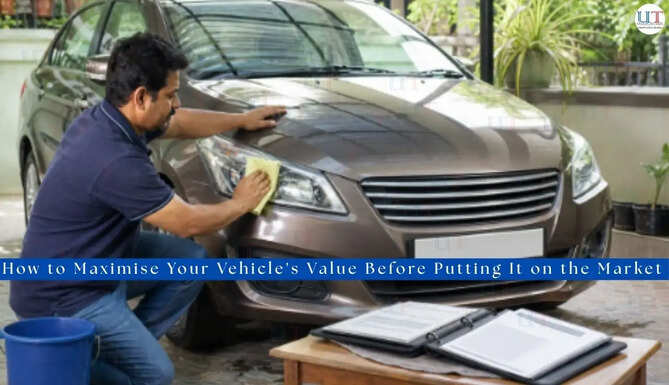
UdaipurTimes, Automobiles and Business Updates | August 18, 2026: Most owners lose money in the last three weeks before a sale. Not during negotiation, but before it. They spend on the wrong things, skip the cheap fixes, and walk into an evaluation carrying a folder full of gaps.
Resale value is not luck. It is the sum of documentation, mechanical condition, and presentation, roughly in that order.
Here is what actually happens: a buyer or evaluator spends the first ten minutes on paper and metal, not on how shiny the bonnet looks. Get those ten minutes right, and the price conversation starts from a higher floor.
The part nobody tells you is how often sellers blow this before they have even opened the bonnet, long before a single number gets floated.
Start with the paperwork, not the polish
Pull out the registration certificate, insurance policy, and service records before anything else. Then check that the chassis number on the RC matches what is stamped on the vehicle.
Loan on the car? The No Objection Certificate and Form 35 from the financier are not optional. Request them early.
Banks routinely take ten to fifteen working days, and a pending hypothecation entry on the RC will scare off serious buyers the moment they see it.
A few other things worth checking before anything else: pending challans, whether the pollution certificate is valid, and whether insurance has an open claim history.
Once that folder is clean, a car valuation becomes a far more predictable exercise, because the assessor is not having to price in the risk of paperwork chaos on your behalf.
Complete service history at authorised service centres measurably improves assessed value when records are consistent and stamped at regular intervals. Missing bills for a major repair invite suspicion.
The mechanical work that genuinely pays back
Not every repair returns its cost. Owners routinely spend heavily on a clutch job right before listing, only to watch the buyer shave that exact amount back off during negotiation anyway.
The real trick is fixing what gets noticed in the first five minutes of an inspection or test drive, and leaving the rest for honest disclosure.
Things that consistently return more than they cost:
-
Tyres with visible tread and matched brands across the axle
-
A battery that fires clean without cranking hesitation
-
Air conditioning that cools within a minute, because evaluators test this every single time
-
All electricals working: power windows, central locking, horn, every last bulb
-
Brakes free of judder or squeal under light application
Things that rarely pay back before a sale
Clutch replacements, suspension overhauls, major engine work. They cost heavily, and buyers still discount for perceived wear. Disclose them. Price accordingly.
A few thousand on tyres and a battery often shifts the final number more than a much larger repair bill would. Simple as that.
Oil leaks deserve a separate mention. Evaluators run their eyes along the sump, gearbox housing, and power steering lines as a matter of habit.
Presentation is cheaper than most owners assume
A professional interior deep clean costs a fraction of a panel respray and influences perception far more. Roof lining, seat rails, boot floor, the area under the spare wheel- all of it gets examined.
Cigarette smell and pet hair are two of the fastest ways to lose value, and both are fixable for under a few hundred rupees.
On the exterior, avoid heavy repainting. Fresh paint on a single panel is easy to catch with a paint thickness gauge, and it makes an assessor assume accident repair whether or not that actually happened.
Machine polishing, scratch removal, and headlamp restoration get you most of the visual gain without triggering that suspicion. Better return, lower risk.
Small details carry real weight
-
Both keys present
-
Original spare wheel and tool kit in the boot
-
Jack and warning triangle, not buried under junk
-
Owner's manual in the glovebox, not missing
Missing keys alone can knock a meaningful amount off an offer. Replacement immobiliser keys are expensive on most modern cars, and buyers know it because they have usually already looked it up.
Owners who intend to sell used car inventory quickly tend to underestimate the importance of photographs. Clean vehicle, even lighting, no clutter in frame, and honest shots of any existing damage.
