

Play Online Ludo Games Where Skill Drives Wins in 2026

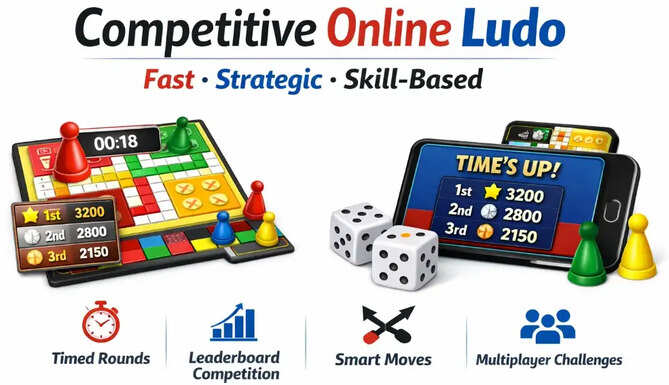
Udaipur, May 25 2026: (Technology and Gaming) A single move can collapse an entire lead. Timers keep running, rankings keep shifting, plus opponents keep adjusting their strategy every few seconds. Mobile board gaming now revolves around quick reactions, score pressure, tactical positioning, alongside constant decision-making instead of slow turns stretched across long sessions. One mistake during the final moments often changes the standings instantly.
Across competitive formats, ludo now feels sharper, faster, along with far more demanding from a strategic perspective. Timed rounds, leaderboard systems, move-limited gameplay, plus multiplayer contests force players to calculate every action carefully before committing to it. Passive movement does not help much here. Strong positioning, defensive awareness, scoring efficiency, and momentum control shape the outcome throughout the match from start to finish.
Quick Competitive Formats Keep Every Match Engaging
Earlier board sessions dragged because players spent too much time waiting between turns. Modern formats changed the pacing completely. Sessions move quickly, scoring opportunities appear constantly, plus every decision carries immediate consequences once the timer begins counting down. Recovery becomes difficult after careless movement because short rounds leave very little space for correction.
A limited-time Ludo format follows a timed structure where participants compete for stronger scores before the clock expires. Match types such as Super Quick, Quick, alongside Regular create different pacing styles while maintaining the same pressure-driven environment. Early control matters. So does timing. A player leading comfortably for most of the round can still lose position after one badly timed capture near the finish.
Faster Sessions Increase Focus
Under shorter timers, hesitation becomes expensive. Players react faster, analyze movement patterns rapidly, plus constantly track opponent positioning while planning their next sequence.
Small delays matter. During the closing seconds, scoring chances appear suddenly, disappear immediately, alongside forcing players into split-second decisions that often determine the final rankings.
Score Margins Change Constantly
Competitive sessions rarely stay predictable for long. One defensive block may protect a lead temporarily, while a sudden capture during the final sequence can erase the gap within seconds.
At higher intensity levels, players stop thinking only about movement. They begin tracking score margins, safe positioning, token exposure, and possible counterattacks before making even simple decisions.
Smart Movement Matters More Than Speed
Fast movement alone solves nothing. Players who push aggressively without controlling positioning usually expose important tokens too early, creating scoring opportunities for opponents later in the round.
Instead, stronger participants balance advancement carefully alongside defensive placement. Controlled movement patterns create stability, particularly when rankings remain close near the final stages.
Every Timer Creates Strategic Pressure
Timers force commitment. There is no space for endlessly evaluating every possible option once the session accelerates toward the final moments.
Why does this matter so much? Because one rushed decision under pressure can completely reverse leaderboard positions after several minutes of otherwise controlled gameplay.
Limited-Move Ludo Format Rewards Smart Decisions
Unlike timer-based formats, some Ludo formats focus on limited moves instead of continuous countdown pressure. Every action carries heavier importance because opportunities remain restricted throughout the session. Wasteful movement damages overall performance quickly, especially once the available move count starts decreasing toward the final phase.
Under this structure, token efficiency becomes critical. Some players chase aggressive captures too early, exposing their own positioning afterward. Others protect scoring advantages carefully, waiting for stronger moments before attacking. Both approaches create different risks. Reading the board correctly, adjusting movement sequences, plus recognizing momentum shifts usually separate stronger performances from weaker ones.
Leaderboard Competition Creates Long-Term Intensity
Single sessions create pressure already. Leaderboard competition multiplies it. Formats like timed games League reward consistency across multiple rounds, pushing players to maintain stronger rankings instead of depending entirely on isolated performances.
Momentum carries forward. Competitive progression changes player behavior significantly once standings begin tightening across consecutive sessions. Certain participants increase aggression to improve score margins quickly, while others focus entirely on defensive stability near the closing stages. Neither approach guarantees stronger results automatically. Decision-making quality matters more than movement speed once pressure starts building across multiple matches.
Multiplayer Matches Feel More Dynamic and Unpredictable
Against real opponents, patterns change constantly. Some players attack immediately. Others remain defensive until late-game opportunities appear. Certain participants prioritize captures aggressively, while others focus almost entirely on positioning control before attempting risky movement.
As multiplayer sessions unfold, adaptability becomes essential. Two-player contests usually feel tighter strategically because every action creates direct consequences almost instantly. Three-player and four-player formats introduce additional unpredictability since rankings can shift rapidly after one sequence. Private rooms add familiar competition among friends, whereas public matchmaking creates broader gameplay variation across every session.
Skill-Based Features Redefine Traditional Gameplay
Several modern mechanics remove unnecessary delays from the experience completely. Certain formats allow immediate token movement without depending on specific opening rolls, helping sessions begin faster, while keeping players involved from the opening seconds rather than forcing passive waiting periods.
Additional systems such as score multipliers, tactical captures, timed rounds, plus structured move limits deepen the competitive layer throughout gameplay. Strong performances usually come from players who recognize vulnerable positioning quickly, pressure opponents during unstable moments, and protect their own scoring advantages when rankings become close near the finish. Defensive movement matters heavily here. So does timing.
Entertainment and Competition Work Best Together
Short sessions fit naturally into daily routines. That matters. Players enter quick contests during breaks, while traveling, or between longer activities without committing to extended gameplay sessions that consume large amounts of time.
Alongside accessibility, strategic depth keeps the experience engaging across repeated matches. Responsive controls, quick matchmaking systems, varied formats, plus constantly shifting competitive situations prevent gameplay from feeling repetitive for long periods. Some players focus on controlled positioning patterns. Others rely on aggressive pressure early. Different styles continue emerging because every session creates new tactical situations requiring different responses under pressure.
Final Thoughts
Searching for a mobile board gaming experience where every tactical choice creates visible consequences immediately? Competitive formats continue attracting attention because quick sessions, leaderboard progression, score-focused gameplay, alongside pressure-driven decision-making create a far more engaging environment than slower traditional structures. Through formats such as Ludo Supreme, Ludo Turbo, Supreme League, multiplayer contests, plus rapid scoring systems, Zupee has built an ecosystem centered around strategic entertainment, competitive intensity, as well as skill-focused gameplay sessions. For players who enjoy adapting quickly under pressure, online ludo becomes significantly more immersive once every move starts influencing rankings, momentum, plus final outcomes directly.
