

Economists Comment on REPO Rate Hike by RBI

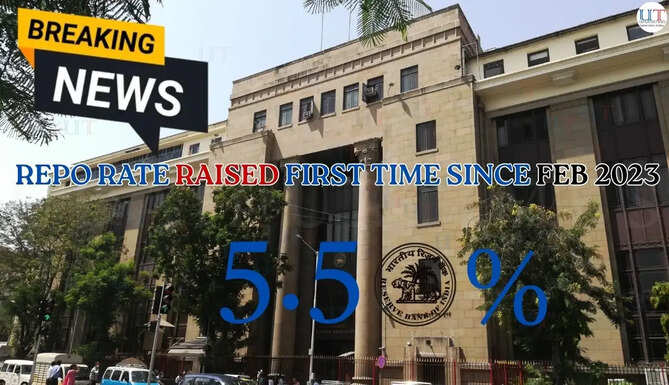
UdaipurTimes, October 7, 2026 | Banking and RBI Policy Updates: The Reserve Bank of India has raised the key repo rate to 5.50% on October 7, 2026. This hike is the first after February 2023 when the rate was hiked to 5.25%.
Comment on the hike by Radhika Piplani, Chief Economist, Motilal Oswal Financial Services:
The RBI raised the repo rate by 25bps to 5.50%, a move the markets had widely expected. More significantly, it shifted its policy stance from neutral to calibrated tightening. That signals the central bank intends to tighten both banking system liquidity and policy rates to contain inflation. We expect a further 75bps of tightening in this cycle, taking the repo rate to 6.25%. This includes a 25bps hike in December, which markets have already largely priced in now.
The RBI was cautious on inflation and raised its full-year forecast to 5.2%, in line with our estimate. Still, it appeared at ease with the growth outlook. It flagged risks from global macro conditions and the effect of higher inflation on rural demand but raised its FY27 GDP growth forecast to 7.1% from 6.7%. We place real GDP growth slightly higher, at 7.2%.
The markets remain confident in India’s growth story despite the RBI’s note of caution. The private capex cycle appears to be regaining momentum, even with global headwinds and a firmer domestic rate environment. Strong bank credit growth should keep supporting activity across large, medium and small enterprises. Services, and banks in particular, look set for robust growth.
Comment on the hike by Sumit Singhania, Head of Research, Bajaj Broking:
The RBI's 25 bps hike to 5.50% is defensible, and the shift to "calibrated tightening" matters more than the rate itself because it rules out near-term cuts. With CPI rising to 4.8% in August and projected at 6.0% in Q3, at the upper edge of the tolerance band, acting now makes sense. Growth projected at 7.1% gives the economy room to absorb it. The global backdrop adds to the case. The US Fed hiked in September, and markets still price a further hike by December, with the October 28 FOMC a live risk. That keeps pressure on the rupee and limits the RBI's room to stay accommodative.
The hike was unanimous, but the 4-2 vote on stance shows two members preferred to keep flexibility rather than commit to a tightening bias. Much of the inflation is supply-driven (monsoon, El Niño, energy), and rate hikes do little against it, so the real aim is to prevent second-round effects. Core inflation excluding precious metals is just 2.9%, which suggests underlying pressures are still contained. If that holds and price pressures don't broaden, the RBI would do best to pause at 5.50% in December, though a further Fed hike could test that call.
Comment on the hike by Sandeep Yadav, Exec Director, DSP Mutual Fund
RBI did not announce any liquidity absorption methods like CRR etc. (expected by us). As we mentioned, the current tools for liquidity absorption should continue. And in next 6 months, in natural course of liquidity will lead to less surplus.
RBI stated concerns about "sudden reescalation" of Iran war since last policy.
On Inflation: Negative
RBI stated comfort on supply side inflation (second order) still not percolated...
- "there are limited signs of supply side pressures getting embedded in pricing behaviour. "
...But worried about oil and food prices
- "The near-term outlook on inflation points towards continued pressures from supply side"
...And a conviction that inflation will move higher
- "it is clear that inflation and its outlook are not benign as they were last year"
Our view: RBI is not as uncomfortable on inflation as we would have thought. This confirms that RBI is in wait and watch. However, if Iran war continues even a quarter more, we believe that second order impact will occur. A decade back RBI’s research reports had stated the second order oil impact can be three times the first order. The risk remains.
On Growth: Neutral
Economic activity remains strong "Growth was driven by resilient private consumption and strong investment activity"....
...But risk that growth will not remain so strong
"Economic activity is holding momentum in Q2, albeit with some moderation compared to the preceding quarter"
But not withstanding usual concerns, RBI seems comfortable on growth.
Our View: Growth is robust, with risks. We believe this is the least of decision driver for RBI.
On currency: Neutral
On Rupee , RBI stated curtailed CAD - with risk to widening...
- "uncertainties pose upside risks to India’s current account deficit in 2026-27"
...RBI also stated marginally better FDI.
Our view: But RBI has never sounded negative on currency, especially in bad times. We still believe that FX flows remain the largest concern for RBI.
Highlights of policy:
- The Monetary Policy Committee (MPC) voted unanimously to increase the policy repo rate by 25 basis points to 5.50%.
- The policy stance has been changed to calibrated tightening, signalling that rate cuts are off the table in the near term.
- Real GDP growth for the full financial year 2026-27 is projected at 7.1% (with Q2 at 7.2%, Q3 at 6.9%, and Q4 at 6.8%).
- CPI inflation for 2026-27 is projected at 5.2%, with upcoming quarters expected to face continued supply-side pressures (Q3 at 6.0% and Q4 at 5.7%).
- Global economic activity remains in flux due to geopolitical conflicts in West Asia, volatile crude oil prices, and hawkish shifts by major central banks like the US Fed.
- Two members (Dr. Nagesh Kumar and Prof. Ram Singh) expressed the view that the monetary policy stance should have been retained as neutral instead of calibrated tightening.
- On Liquidity, Governor mentioned that Reserve Bank will use an appropriate mix of liquidity management tools and strive to align the weighted average call rate (WACR) with the policy repo rate.
- In Q&A Governor mentioned that calibrated tightening meant milder form of tightening – not necessarily that rate hikes are given.
- In Q&A Governor also mentioned that while no action is rules out, but CRR hike will be the least preferred option. The currency leakage and FX will automatically lead to lower liquidity.
Disclaimer: This Post is not written or produced by UdaipurTimes writers/journalists. UdaipurTimes follows ASCI guidelines for Online Advertising. The information may involve financial or health risk and UdaipurTimes does not endorse or promote any claims made in this post.
