

Macro & Market Update: Impact of Escalating Tensions in the Middle East
US and Israel strikes on Iran and the death of Supreme Leader Ali Khamenei have escalated Middle East tensions. Global markets fall, crude oil rises, and India faces trade and remittance risks.

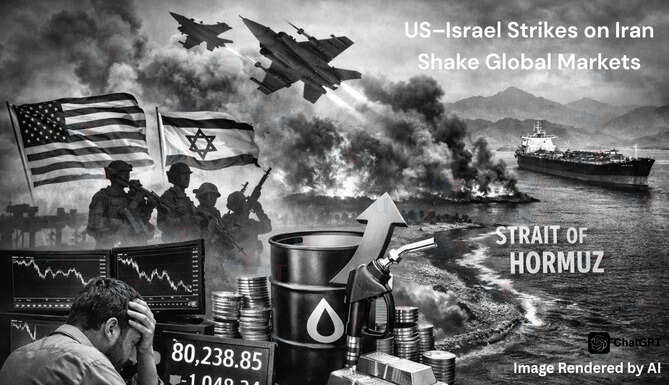
Mumbai, Mar 05, 2026: Global risk sentiment deteriorated over the weekend after the United States and Israel carried out coordinated strikes on Iranian military bases. The situation escalated further following the death of Ali Khamenei, along with several senior Iranian leaders.
The developments have significantly heightened geopolitical tensions in the Middle East, raising fears of a wider regional conflict and creating volatility across global financial markets.
SNAPSHOT
Rising Regional Escalation: The ongoing Iran conflict carries broader risks than recent regional tensions. The US–Israel action against senior Iranian leadership and the subsequent retaliatory strikes have heightened instability across the Middle East, raising the risk of wider regional escalation.
US & Israel’s objectives: As per the respective governments they US and Israel jointly aim to stop Iran from developing nuclear weapons and trigger a regime change in Iran.
Iran's Response: Tehran responded by targeting US military bases and other sites across strategic locations such as Qatar, UAE, Kuwait, Bahrain and Israel - broadening uncertainty around a regional conflict.
Indian diaspora in Middle East: With nearly 9mn Indians residing in the Middle East – contributing ~38% of India’s total remittances – the region holds strategic importance for India. It also accounts for ~15% of India’s exports and ~21% of imports, with the UAE, Iraq, and Saudi Arabia forming the core of bilateral trade flows.
Concerns around logistics rise: Exporters have raised strong concerns that the conflict could disrupt shipping through the Strait of Hormuz and the Bab el-Mandeb Strait, both of which are crucial maritime corridors. These routes serve as important links connecting India with the gulf region as well as major markets in North America and Europe.
Market reaction:
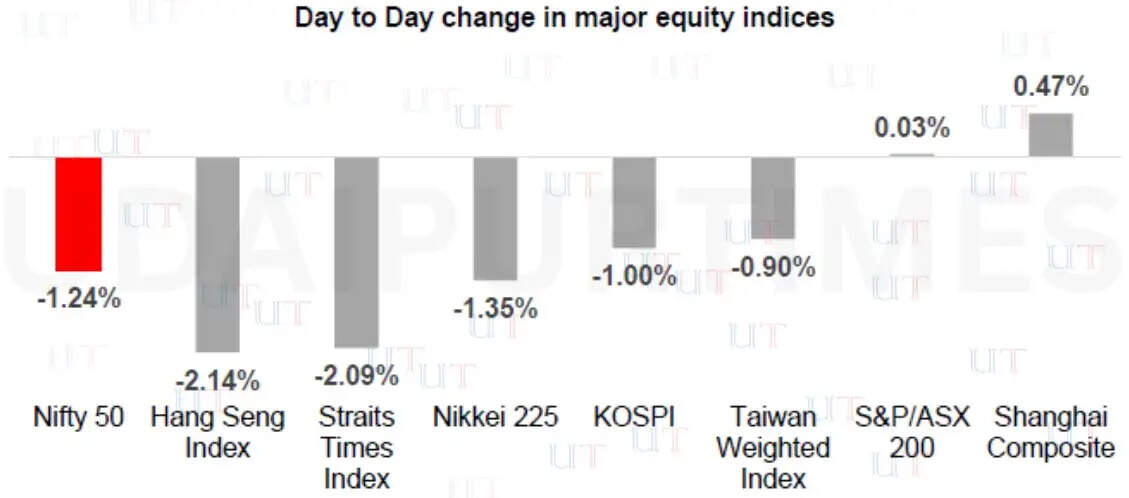
Commodity prices spurts, equities & currencies tank. India and global equities declined following escalating tensions in the Middle east. At close, the Sensex was down 1,048.34 points or 1.29 percent at 80,238.85, and the Nifty was down 312.95 points or 1.24 percent at 24,865.70.
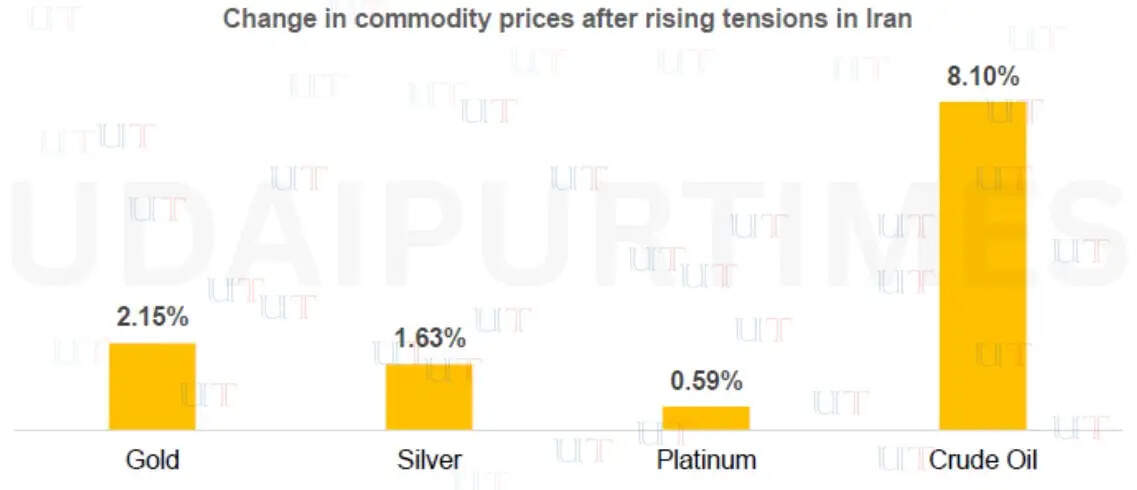
Both precious and industrial metals shot up – this was despite moves higher in the DXY. Moves higher in crude oil prices was on account of an unofficial stoppage of oil shipping in the Strait of Hormuz by Iran.
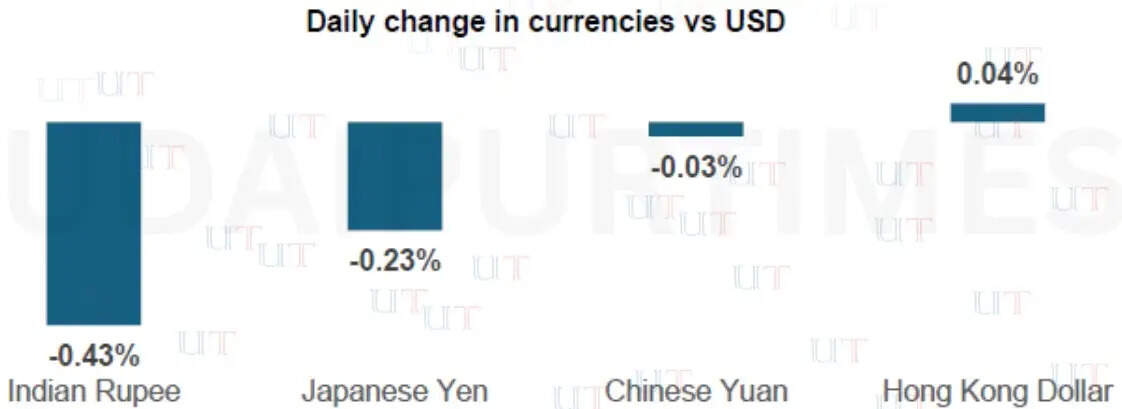
With moves higher in dollar index, major currencies depreciated with worsening global tensions. INR weakened by 50 bps, with further fall likely capped on anecdotes of RBI FX intervention.
While the share of Russia in India's oil imports shot up in FY25, this trend reversed the current fiscal. India's crude oil imports from the UAE almost doubled in Jan'26 (given pressure upon India to reduce its oil purchases from Russia).
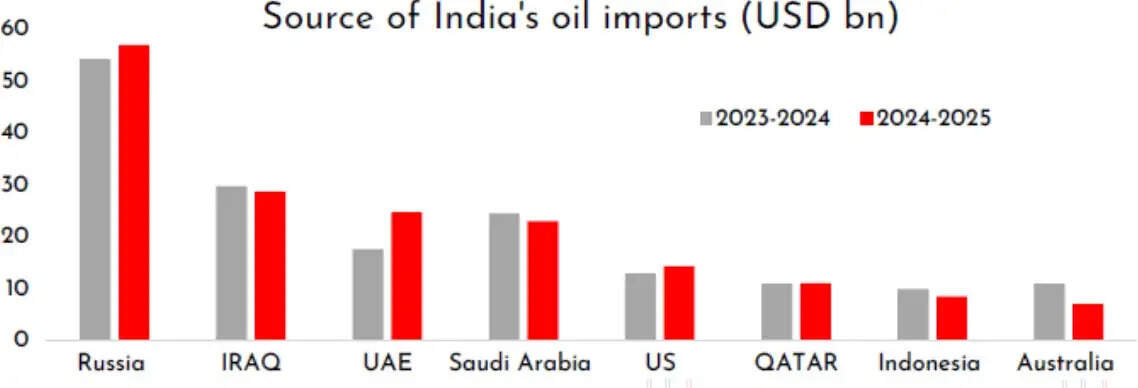
Source: Investing.com, Ministry of trade & commerce, SWL
Significance of Strait of Hormuz
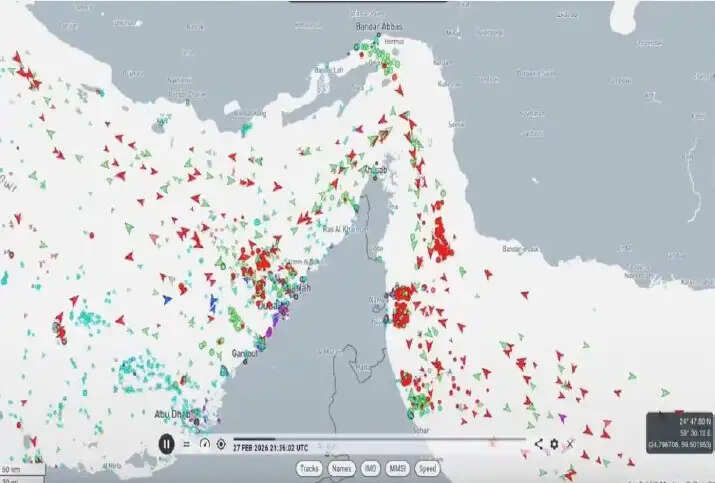
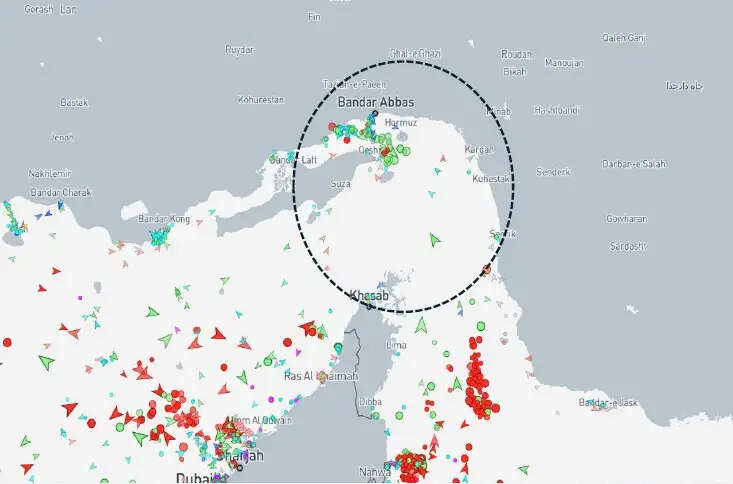
This is a crucial 33km waterway for oil and gas connecting supplies from Saudi Arabia, UAE, Iraq, Qatar, Bahrain and Oman. Follow escalating tensions in Iran,the traffic volume across the waterway is unofficially closed. Ships are said to be holding back movement across the Strait due to ongoing conflict. The chart below is before the tensions started Feb 27, 2026.
The reduced traffic as seen in the chart below shows the Strait empty of traffic and implies that ocean carriers are waiting to see how the situation between the US, Israel, and Iran unfolds. This waterway controls approx. 20% of world's oil supply, and crucial for East Asian economies.
Sectoral Impact
The geopolitical situation in the Middle East has triggered risk-off sentiment in Indian stocks, with crude-linked pressure weighing on broad markets, while some sectors (like defence and upstream energy) benefit from safe-haven or commodity dynamics. Continued conflict may keep volatility high and markets biased negatively but markets eventually refocus on earnings, liquidity, and growth — unless the geopolitical event alters those fundamentals structurally.
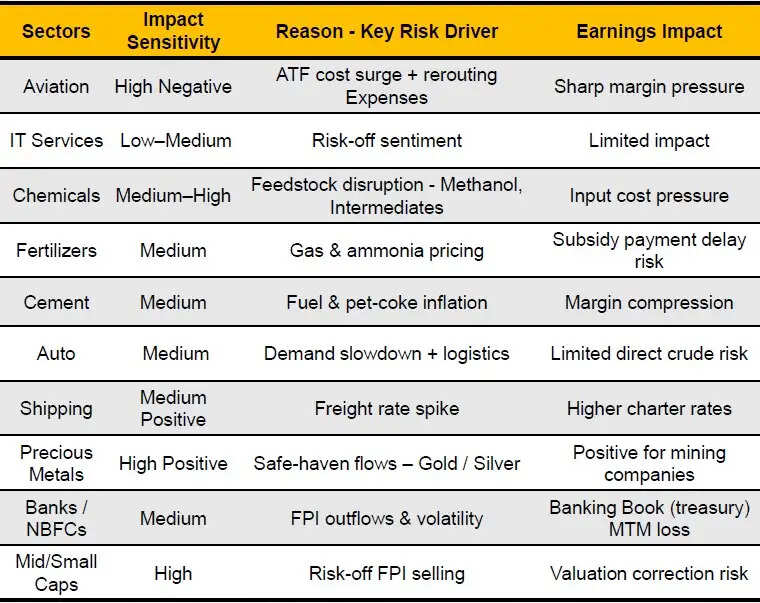
Sectors reliant on crude-linked inputs—such as chemicals, paints, pharma & APIs, airlines, tyres, agrochemicals, and oil marketing companies (OMCs)—are likely to face margin pressure from higher oil prices.
Companies with meaningful exposure to the Middle East—such as L&T, Adani Ports, and selected chemical players—may also face operational and earnings risks. The defence sector is likely to benefit from improving sentiment amid rising global defence spending.
Bullion, traditionally regarded as a safe-haven asset, has scaled consecutive record highs this year, underscoring heightened economic and geopolitical uncertainty. Any further escalation is likely to support gold and silver prices in the short term, which would be positive for Gold and Silver ETF investments.
What Next?
- The scope of this conflict appears worse, with ongoing tensions likely to be longer than the 12-day war in Jun following retaliation by Iran across strategic locations,.However, tensions could ease over the next five to six weeks. Markets will be watching any intervention from Russia and China, considering that a sizeable portion of China’s imported crude oil moves via the Strait of Hormuz and they would be keen to cap oil prices and normalize logistics—this hope is reflected in the relatively less dramatic market reaction across indicators.
- On easing of tensions, crude oil prices are expected to move back towards USD $70/barrel. Additionally, market participants are also of the view that a steep rise in crude oil prices is less likely to continue given US mid-term elections later this year.
- The recent correction in local equities have resulted in a moderation in India stock valuations. We continue to maintain inclination towards large cap companies in a staggered manner, with global tensions still evolving.
- While valuations have moderated, we believe FPIs will likely refrain from EMEs like India until ongoing tensions ease. India bond yields edged higher 4-5 bps tracking moves higher in crude oil prices and sharp weakness in INR, though this appears more like a knee jerk reaction. Lastly, precious metals (gold & silver) have also jumped on tensions around the Middle East region.
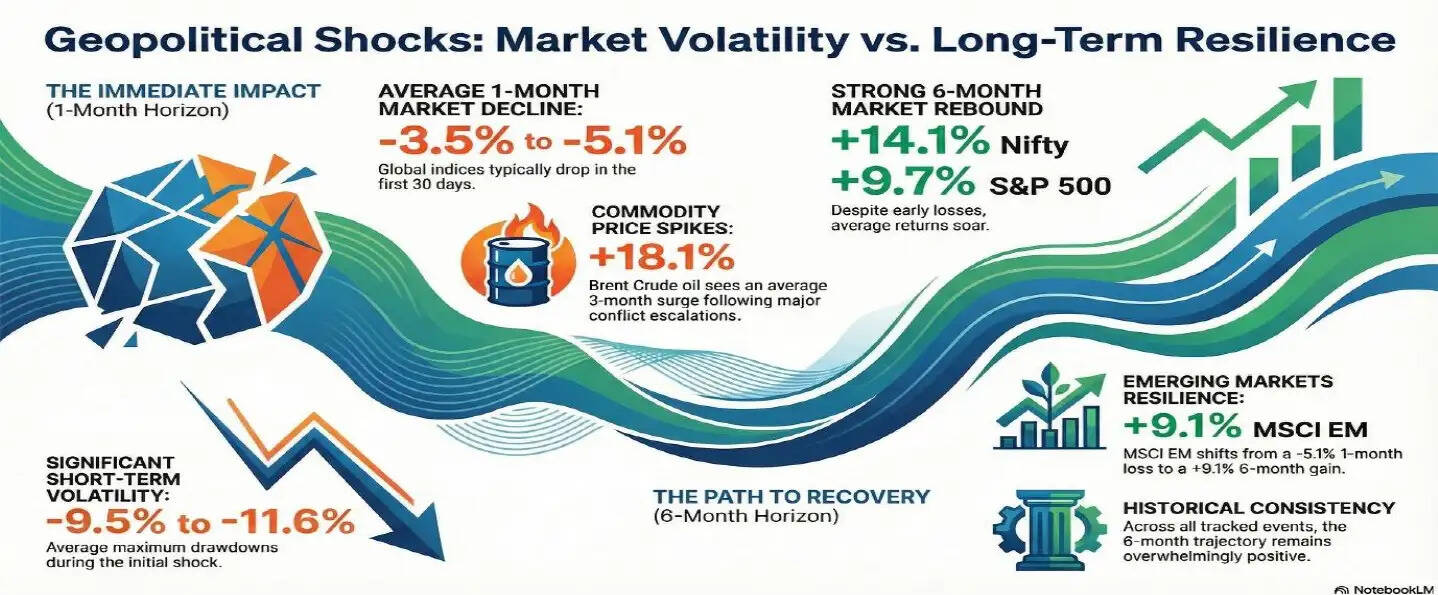
Market Performance During Past Episodes of Geopolitical Conflicts
The chart below illustrates thehistorical performance of global stock indicesandcommodity prices following majorgeopolitical conflictsand acts of terrorism.Past records suggest that whilewarfare triggers temporary instability, global financial markets frequently demonstratelong-term resilience, with a consistent pattern ofmarket recoveryand growth over a six-month horizon.
Company Disclaimer: Investors are advised to consult their independent financial, legal, and tax advisors before making any investment decision. Past performance is not indicative of future results, and investments are subject to market risks. SWL is not registered as a SEBI Investment Adviser and does not provide investment advisory services or personalized investment recommendations.
Source of Information: Sriram Wealth Limited (via ConceptPR)
