


How CGPA-Based Grading Systems in India Are Changing Academic Assessment
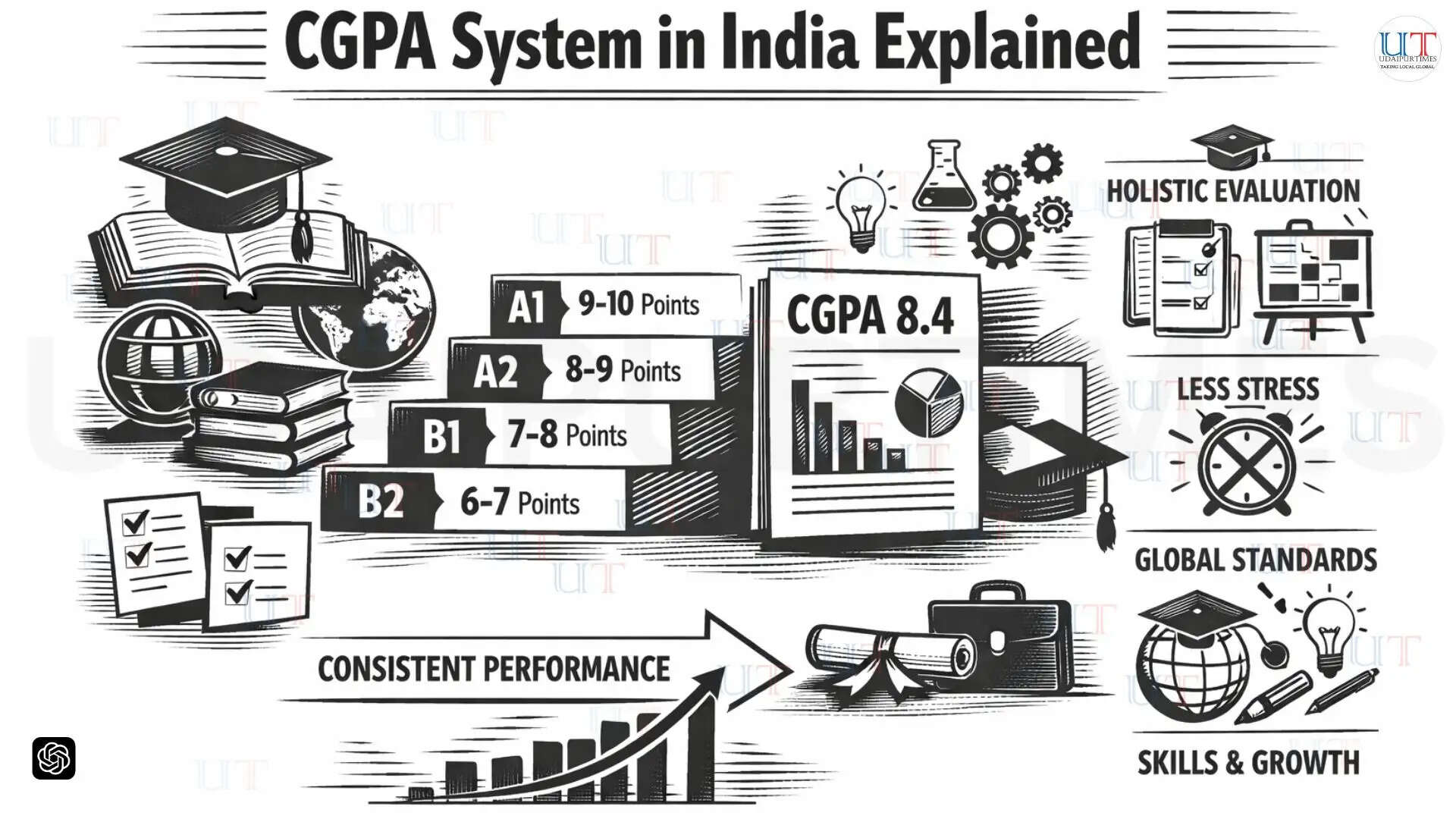
Udaipur, April 4, 2026: If you have studied in India over the past decade, you likely have seen a clear shift in how academic performance is measured. Traditional marks-based systems are gradually being replaced by CGPA Based Grading System in India, changing the way schools and universities evaluate students.
This transformation is part of a broader evolution in grading in education, where the focus is moving from rote learning and percentage scores to a more balanced and holistic assessment of a student's abilities. Understanding this shift can help you adapt better and make smarter academic choices.
Key Takeaways
- CGPA-Based Grading Systems in India focus on grades rather than marks
- The system reduces stress and promotes conceptual learning
- It supports holistic evaluation through project and internal assessments
- CGPA aligns Indian education with global academic standards
- Students must focus on overall performance, not just exam scores.
What is the CGPA Base Grading System?
The CGPA Based Grading system in India (Cumulative Grade Point Average assign grades instead of exact marks. These grades are then converted into grade points, which are averaged to calculate your overall academic performance. For example:
- A1 grade may correspond to 9-10 grade points
- A2 to 8-9 grade points
- B2 to 7-8 grade points
Instead of focusing on mirror differences in marks, the system groups performance into broader categories.
This approach is widely used by boards like the Central Board of Secondary Education, as well as many universities across the country.
Why India Shifted from Marks to CGPA
The tradition marks based system often created intense competition and pressure among students. Even a difference of one mark could impact ranking and opportunities. The move toward CGPA in graduation in education aims to:
- Reduce exam-related stress
- Encourage conceptual understanding
- Promote overall development
- Minimise unhealthy competition
By focusing on grades instead of exact marks, the system allows a more flexible evaluation of performance.
How CGPA Changes Academic Assessment
The introduction of the CGPA-Based Grading System in India has significantly changed how students are assessed.
- Focus on Conceptual Learning
Instead of memorising the content for marks, you are encouraged to understand concepts and apply them in practical situations.
- Reduced Pressure from Minor Score Differences
In a marks-based system, scoring 89 vs 90 could make a big difference. In CGPA, both may fall under the same grade band, reducing unnecessary stress.
- Holistic evaluation
Many institutions now combine grades with internal assessment, projects, and practical work. This ensures that your performance is not judged by a single exam.
- Encourage Consistency
CGPA reflects performance over time rather than one final test, encouraging consistent effort throughout the academic year.
Benefits of CGPA-Based Grading Systems
The shift in grading in education brings several advantages for students.
Less Academic Stress
Students are less likely to feel pressure from a small difference in marks.
Improve Learning Experience
Focus shifts from memorisation to understanding and skills development.
Fairer Assessment
Grades provide a broader evaluation rather than judging students on precise numerical scores.
Better Alignment with the global System
Many international education systems use GPA or similar grading methods, making it easier to align Indian education with global standards.
Challenges and Criticism
While CGPA Based Grading System in India offers many benefits, it is not without challenges.
Lack of detailed Differentiation
Since grades group students into ranges, it can be difficult to distinguish between high-performing students without the same band.
Conversion Confusion
Students sometimes struggle when converting CGPA into percentages for college admission or job applications.
Varied Implementation
Different boards and universities may use slightly different grading scales, which can create inconsistency.
Impact on Higher Education and Careers
The evolution of grading in education is also influencing how universities and employers evaluate students. Many institutions now consider the following:
- CGPA along with entrance exam scores
- Academic consistency over time
- Skills, internships, and extracurricular activities
This means your overall profile matters more than just the final score.
The shift towards CGPA Based Grading System in India reflects a broader change in how academic success is defined. Instead of focusing only on marks, the system encourages deeper learning, consistency and overall development.
As grading in education continues to evolve, adapting to these changes can help you build a stronger academic journey. Considering international education pathways, expert guidance from Leverage Education can help you make informed decisions and achieve your long-term goals.
#CGPA #EducationIndia #GradingSystem #StudentLifeIndia #AcademicSuccess #EducationReform #CBSE #HigherEducationIndia #LearningSystem #HolisticEducation #RajasthanEducation #UdaipurStudents #IndiaStudents #StudyIndia #CareerGrowth
DISCLAIMER:
This Post is an Advertorial. It is not written or produced by UdaipurTimes writers/journalists. UdaipurTimes follows ASCI guidelines for Online Advertising. The information may involve financial or health risk and UdaipurTimes does not endorse or promote any claims made in this post.