

Religion, Restrictions and Rights
An in-depth analysis on religion, women’s rights and the practice of Iddat (Iddah); Gulnaaz Rasiya examines its historical purpose, modern challenges and the need for reform in light of science and human rights

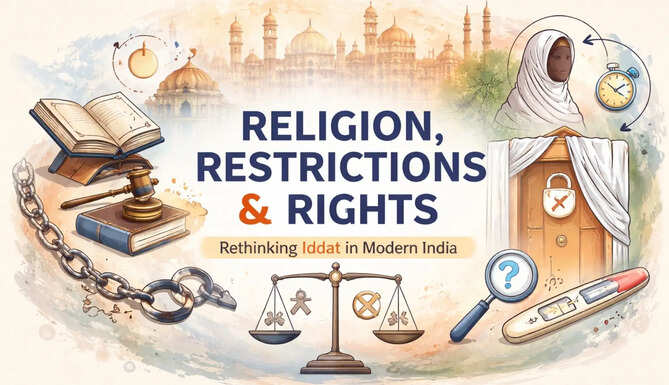
Udaipur, Feb 25, 2026 - As human civilisations evolved over time, religion, philosophy, law and social norms emerged to organise collective life. Early humans lived in tribes where certain rules were established for the common good and each member was expected to conform to these norms. Religion has always played a significant role in human civilisations. Every religion has its own philosophy, along with specific rituals and practices. Over time, these rituals and practices become traditions and form an integral part of culture, deeply rooted in daily life.
However, change is the law of the universe. With advancements in science and technology, ways of life evolve and old beliefs must be re-examined. Dogmas should give way to logical thinking and critical questioning. Although societies have progressed significantly in education, science, technology, literature and the fine arts, there is a lack of rationale.
Every social practice originates with a purpose. One such practice is Iddat (or Iddah), followed in several communities. The term Iddah is derived from an Arabic word meaning “waiting” or “counting”. It refers to the waiting period a woman must observe after the end of a marriage through the death of her husband or divorce, during which she is not allowed to remarry. This period typically lasts for three menstrual cycles.
Historical Perspective
Historically, the purpose of this practice was to determine whether a woman was pregnant at the time of her husband’s death or divorce. If a woman remarried soon and later discovered she was pregnant, determining biological paternity would be difficult. To avoid such confusion, a waiting period was mandated. During this time, women were expected to limit interaction with unrelated men and were encouraged to dress simply, without ornamentation.
In contemporary times, however, determining pregnancy has become straightforward with modern medical science and home pregnancy testing kits, which can provide results within minutes. There is no longer a biological necessity to wait for three menstrual cycles.
Due to a lack of awareness and reinterpretation, this practice is often followed in an extreme and distorted manner today. In some communities, widows are confined to their homes for a little over four months, effectively placed under house arrest. They are forbidden from stepping outside, peeping out of windows, going under the sky, looking into mirrors or being seen by others. They are required to wear only white clothing and use white household items. They cannot read newspaper, cannot watch television and cannot attend phone calls. In some cases, if a male child accidentally enters their room, the waiting period is restarted — an illogical and oppressive interpretation.
Patriarchal Practice
Such practices are deeply patriarchal and constitute violations of human rights. The loss of a spouse is traumatic, and women need social support, fresh air and engagement in meaningful activities to heal. Confinement and social isolation can lead to depression and other mental health issues.
The practice also affects women’s health, financial stability and careers. Older women who are beyond reproductive age are still forced to observe these restrictions. If they fall ill, they may not be taken to hospitals and instead require female doctors to visit them at home, which is impractical in emergencies. Students and working women cannot afford to remain confined and unproductive, as this negatively impacts their education and professional trajectories. Moreover, widows cannot go out to complete legal formalities.
The original religious prescriptions allow women to go out, work and earn a livelihood during the Iddat period. They can continue their daily activities, take care of their children and interact with others, including male members. The primary requirement is modest conduct, which, in some interpretations, includes covering the face, but not confinement or social isolation. Importantly, religious texts do not mandate such forms of house arrest or illogical restrictions.
Call for Reform
Many scholars, activists and thinkers within the community have questioned the contemporary interpretation of Iddat and advocated for reform. However, these voices are often suppressed and meaningful change has been slow or absent.
History shows that harmful practices can be reformed. Practices such as Sati were abolished and widow remarriage which was once considered a taboo became normal through the efforts of social reformers like Raja Rammohan Roy and Ishwar Chandra Vidyasagar. The religious scriptures were reinterpreted and social reforms were implemented. The description of Iddat is different from many contemporary cultural practices. There is a need for reinterpretation of religious texts in light of modern knowledge and human rights.
Before following any tradition blindly, we must question, investigate and seek the truth.
#Udaipur #Rajasthan #UdaipurNews #ReligionAndRights #Iddat #Iddah #WomenRights #GenderJustice #SocialReform #HumanRights #MuslimWomen #ReligiousReform #IndiaNews #RajasthanNews #ModernIndia #ThinkRational #CommunityAwareness
