


To the Moon and Back! Artemis II Splashes Down to Earth
NASA’s Artemis II crew safely returns after a historic 10-day Moon mission, marking humanity’s first deep-space journey since 1972 and paving the way for future lunar landings
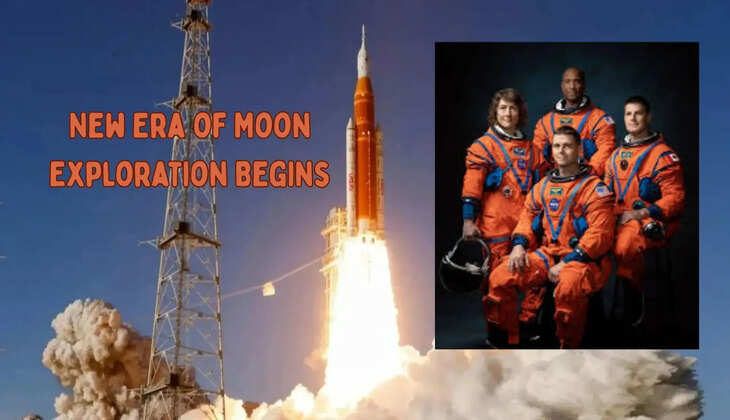
April 11, 2026 - NASA’s Artemis II mission successfully ended with a splashdown in the Pacific Ocean near California in the US early Saturday (April 11) morning. The spacecraft, with a four-member crew, returned to planet Earth after a 10-day journey to the moon landing at about 8:07 pm ET (April 10) after a high-speed, high-risk re-entry into our atmosphere. NASA used a direct re-entry path (instead of “skip re-entry”) to reduce stress on the heat shield after issues with Artemis I.
Recovery teams from the US Navy (USS John P Murtha) safely retrieved the crew which included Reid Wiseman (Commander), Victor Glover (Pilot), Christina Koch (Mission Specialist) and Jeremy Hansen of Canadian Space Agency.
Artemis II had taken off on April 1 from the Kennedy Space Center aboard Nasa’s Space Launch System (SLS). This mission is widely described as the start of a “new era” of human space exploration and is the first human mission beyond low-Earth orbit since Apollo 17 in 1972.
The spacecraft travelled ~690,000+ miles (over 1.1 million km) and re-entered the Earth’s atmosphere at speeds almost 35 times the speed of sound.
Historic Firsts
- First woman (Koch) to travel to the Moon
- First Black astronaut (Glover) on a lunar mission
- First non-American (Hansen) to go to the Moon
- First humans to travel the greatest distance from Earth - 252,756 miles
Achievements
- Performed a lunar flyby (not landing on the moon)
- Captured stunning images of Earth and Moon
- Tested life-support, navigation and deep-space systems
- Speed during re-entry: ~25,000 mph (40,000 km/hr)
- Temperature: up to ~5,000°F (2,760°C)
Experiences
- 6-minute communication blackout owing to plasma build-up
- Witnessed a total solar eclipse from space
- Witnessed unusual meteorite impacts on the lunar surface
Artemis II is the first crewed mission of NASA’s Artemis programme and has established the fact that humans can safely travel deep into space and back. It is a critical step toward returning humans to the Moon and eventually going to Mars. The Orion spacecraft and SLS rocket are viable for future missions including a planned lunar landing mission.
#ArtemisII #NASA #MoonMission #SpaceExploration #LunarMission #DeepSpace #OrionSpacecraft #FutureOfSpace #MarsMission #UdaipurNews #RajasthanNews #GlobalNews