

NHAI Guidelines for High-Speed National Highway Corridors
The new guidelines are aimed at ensuring that the High-Speed National Highways are better designed and planned, safer, greener and ready to meet the needs of future traffic

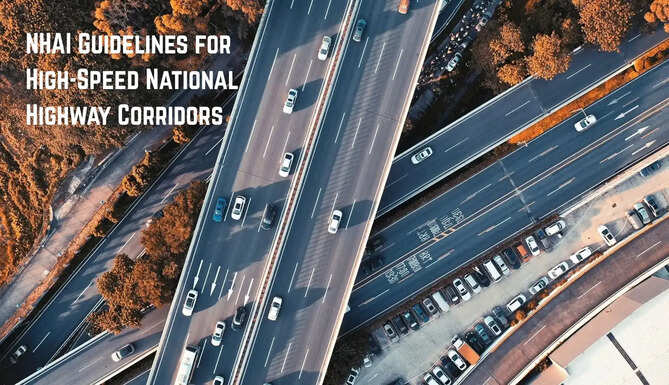
UdaipurTimes, Sept 25, 2026 - The National Highways Authority of India (NHAI) has released comprehensive guidelines for the planning and design of High-Speed Access-Controlled National Highways, other than Expressways. The new guidelines are aimed at ensuring that the High-Speed National Highways are better designed and planned, safer, greener and ready to meet the needs of future traffic. They will apply to all upcoming four and six-lane Greenfield and Brownfield High-Speed Access-Controlled National Highways, according to a Ministry of Road Transport and Highways (MoRTH) press release.
Data-Driven Planning
The guidelines lay emphasis on comprehensive traffic assessment and future demand planning. Traffic projections shall take into account existing and diverted traffic, along with expected growth in freight movement. Toll data and other reliable sources will also be used to make traffic estimates more accurate.
Technology-Enabled Construction
The protocols provide for the use of Automated and Intelligent Machine-aided Construction (AI-MC) technology for construction of embankments and highway pavements, in accordance with applicable MoRTH guidelines. A shift will be made to install Multi Lane Free Flow (MLFF) system of tolling on High-speed corridors and provisions for implementation of MLFF shall be made accordingly.
Landscaping and Environment
Landscaping and plantations will be planned at suitable locations such as loop areas, below flyovers, medians and other suitable locations, keeping in view local climate, topography and environmental conditions. Drip irrigation systems will also be provided on National Highway medians.
Better Drainage and Water Management
Comprehensive drainage planning will form an integral part of the DPR process. The planning will identify where rainwater will be disposed and how water from the National Highway and surrounding areas will be safely managed.
Special arrangements will be made to manage water around underpasses, flyovers, depressed medians and other structures, helping to prevent water logging and damage to the National Highway infrastructure.
