

Sabarimala Hearing: Supreme Court Debates Religious Freedom vs Equality
The Supreme Court’s 9-judge Constitution Bench continues Sabarimala temple hearings; key debates include religious freedom, women’s entry and constitutional morality

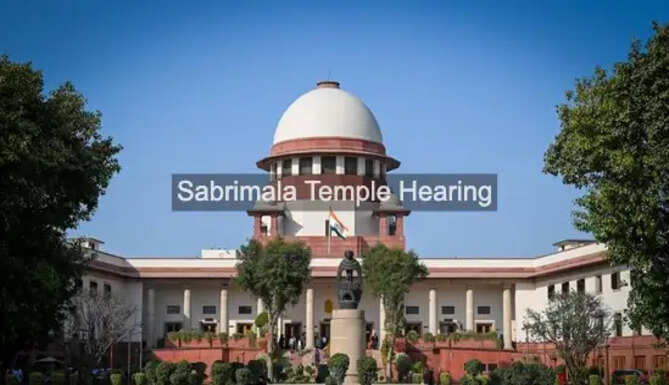
April 8, 2026 - A nine-judge Constitution Bench of the Supreme Court is actively hearing the Sabarimala temple case related matters starting April 7, 2026. Day 2 of hearings is ongoing on Wednesday (April 8). The Bench, led by Chief Justice of India (CJI) Surya Kant, is not directly reviewing the 2018 verdict yet, but focusing on larger Constitutional questions.
The Court is currently examining seven major Constitutional issues, including:
- Scope of religious freedom (Articles 25 & 26).
- Whether religious practices can override fundamental rights (like equality).
- Meaning of “constitutional morality”.
- Limits of judicial review in religious matters.
- Whether a non-related person can challenge practices of a religious group.
The Court is also debating the difference between public temples vs denominational temples and whether exclusion can be part of essential religious practice.
In today’s hearing, Justice BV Nagarathna questioned menstrual-based exclusion, saying women cannot be treated as “untouchable” for a few days every month.
The Central Government, represented by Solicitor General Tushar Mehta, told the Court that the 2018 judgment allowing women’s entry was “wrongly decided” and laid stress on respect for religious traditions and beliefs.
In 2018, the Supreme Court had passed an order allowing women of all ages to enter Sabarimala temple in Kerala. After protests, the matter was referred to a larger Bench to settle broader Constitutional issues.
The hearings have been scheduled in phases:
- Supporting review arguments: April 7–9
- Opposing arguments: April 14–16
- Final arguments: around April 21–22
Date of the final judgment has not been fixed yet but will be given after all arguments have concluded.
There are 66 matters tagged to the Sabarimala Review, including cases such as the right of Muslim women to enter mosques, the right of Parsi women to enter a Fire Temple after marrying a non-Parsi, and the practice of female genital mutilation (FGM) among the Dawoodi Bohra community.
With Media Inputs
#Sabarimala #SupremeCourt #ConstitutionBench #ReligiousFreedom #WomenRightsIndia #EqualityDebate #LegalNewsIndia #TempleEntry #ConstitutionalMorality #JudiciaryIndia #BreakingNewsIndia #LawAndSociety
