

Udaipur Success Story: Engineer Neha Sakka is First Indian Recipient of LUCE Emerging Talent Award
International recognition shines a spotlight on a Rajasthan engineer's mission to ensure that women, rural youth and first-generation learners are not left behind in the Green Transition.
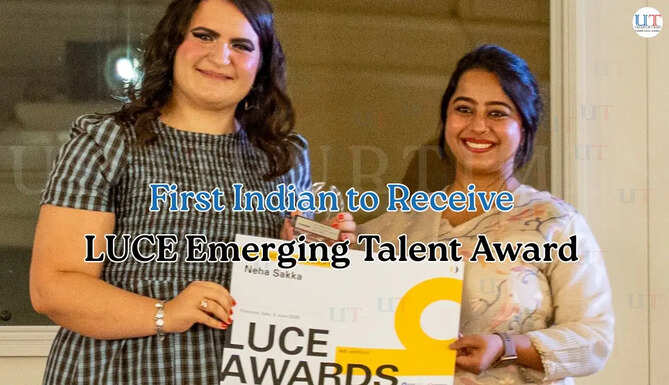
Florence/Udaipur, June 2026 | Breaking News from Udaipur: On 9 June 2026, in the historic city of Florence, Italy, a young engineer from Rajasthan stepped onto an international stage to receive a recognition that no Indian had received before.
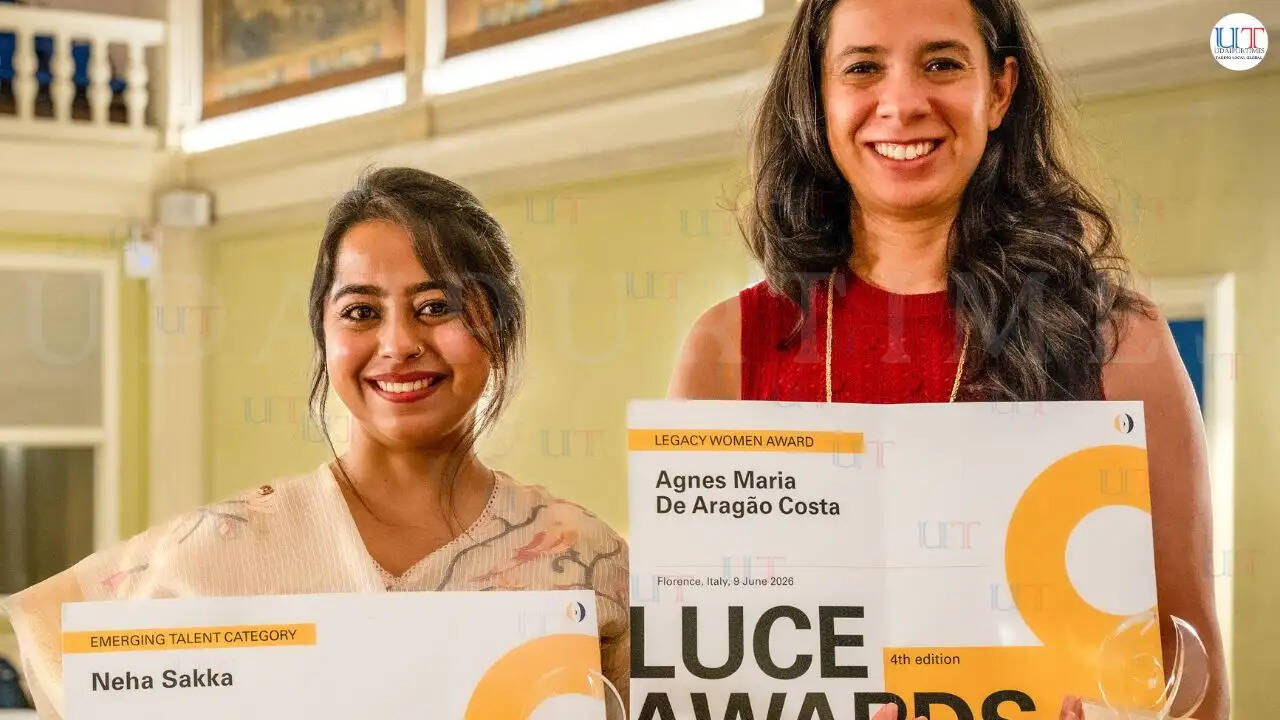
Er. Neha Sakka, an electrical engineer working in Rajasthan's power sector and founder of the Trust EV Awareness Oath Program (TEVAOP), became the first Indian recipient of the LUCE Emerging Talent Award 2026 at the European University Institute (EUI), Florence. Breaking News Udaipur
What is LUCE Awards
Presented under the Lights on Women initiative of the Florence School of Regulation (FSR), the award recognises emerging female leaders contributing to climate action, sustainability, energy transition and inclusive development. The recognition was announced during the LUCE Awards programme, which brought together policymakers, regulators, researchers and sustainability leaders from around the world, including representatives from the European Commission and leading energy institutions. LUCE Awards for Indians
For Rajasthan, it was a proud moment.
For Sakka, however, the award represented something much larger than personal achievement. It represented a question that has shaped much of her work.
Who gets the opportunity to participate in building the future green economy?
A Journey That Began Long Before Florence. The story behind the award did not begin in Europe; it began generations earlier.
Five generations of Sakka's family had passed without the birth of a girl.
Her Early Years
When she was born, she became the first female child in five generations of her family. In a conservative social environment where higher education and professional careers for girls were often viewed as secondary to traditional expectations, her future could easily have followed a familiar path.
Instead, several members of her family chose to believe in something different.
Her paternal grandfather, Late Haji Mohammed Abdul Latif, managed limited resources through a small flour mill. Despite financial constraints, he remained committed to educating girls at a time when such thinking was uncommon within his social environment. Long before discussions around women's empowerment became mainstream, he openly imagined a future in which a granddaughter could become an engineer. Success Story from Udaipur
His belief in education extended beyond the next generation. He encouraged the education of his daughter-in-law, Zahida Begum, after marriage, reflecting his conviction that learning should not end because of social expectations.
Sakka's maternal grandfather, Haji Khuda Bux Saqqa, played an equally important role. He spent years strengthening her foundation in mathematics and science, encouraging curiosity, discipline and analytical thinking. At a time when many families considered educating daughters beyond primary school an unnecessary expense, he consistently reinforced the importance of technical education and intellectual independence. Success Story from Rajasthan
The third pillar was Neha's mother, Zahida Begum.
Married before completing her graduation, she belonged to a generation of women whose educational journeys were often interrupted by marriage, pregnancy and family responsibilities. Although she continued her studies after marriage with family support, professional participation never fully became a reality. That experience stayed with her.

She understood something that millions of women continue to experience even today: education and opportunity are not always the same thing.
Determined that her daughter would have access to both, she consistently emphasised financial independence, professional identity and the importance of meaningful participation in society.
Alongside her, Sakka's father, Mohammed Ishtiyak Sakka, remained a steadfast supporter of her educational and professional aspirations. He encouraged her to pursue engineering despite prevailing social expectations and helped create an environment in which ambition was not limited by gender.
Together, the efforts of her parents, grandparents and extended family changed the trajectory of a family.
The first female child born in five generations would go on to become its first professional woman engineer.
From Personal Experience to Public Purpose
As Sakka progressed through engineering education and entered Rajasthan's power sector, she began noticing a pattern that extended far beyond her own story. Many capable young people were not being left behind because they lacked talent.
They were being left behind because they lacked access - access to information; access to mentors; access to technical exposure; access to professional networks and access to opportunities.
This observation became particularly visible as India accelerated investments in renewable energy, electric mobility, battery manufacturing and industrial decarbonisation.
While discussions around climate action often focus on technology, finance and infrastructure, Sakka observed another challenge developing quietly beneath the surface - participation of youth in the Green Transition remained uneven.
The opportunities created by the transition were often concentrated among those who already possessed educational, financial and institutional advantages.
The challenge, she concluded, was often not a lack of capability, it was a lack of access.
Building Pathways Through TEVAOP
Motivated by this realization, Sakka established the Trust EV Awareness Oath Program (TEVAOP), an independent and non-commercial initiative focused on green-skills awareness, electric mobility literacy and sustainability education.
The objective was simple but ambitious: make emerging green technologies understandable and accessible to people who are often excluded from conversations around climate and technology.
Since its inception, TEVAOP has:
- Reached more than 5,500 participants.
- Conducted over 130 programmes.
- Delivered more than 450 hours of engagement and training.
- Worked with students, educators, technical institutions, government stakeholders and industry representatives.
- Focused particularly on women, rural youth, first-generation learners and underrepresented communities.
Through bilingual engagement, practical demonstrations and community-based learning models, the initiative seeks to reduce barriers that often prevent young people from participating in emerging sectors.
The work has reinforced a recurring observation:
Many barriers faced by learners are not technical.
They are barriers of information, confidence, mentorship, exposure and opportunity.
Why the World Is Paying Attention
The issue highlighted through Sakka's work extends far beyond Rajasthan or even India.
Countries across the Global South are investing heavily in clean energy, sustainable transportation, electric mobility and industrial transformation.
However, the workforce required to support these transitions must extend far beyond traditional urban and institutional centres.
Women currently account for only around 11 per cent of India's renewable-energy workforce. Globally, fewer than 15 per cent of leadership positions in the energy sector are held by women.
The challenge therefore extends beyond technology deployment.
It concerns who will participate in building the future green economy.
During discussions in Florence, one message resonated strongly:
"Climate change affects everyone. The opportunities created by solving it still do not."
For Sakka, this idea captures one of the defining challenges of our time.
The success of the Green Transition will not be determined only by how many solar parks are built, how many electric vehicles are deployed or how quickly emissions are reduced.
It will also be determined by whether the opportunities created by climate action become accessible to women, youth, first-generation learners and communities that have historically remained on the margins of economic development.
A Moment of Pride for Rajasthan
The recognition in Florence is undoubtedly an individual achievement, but it is also a reflection of the values that shaped it.
It is the story of a grandfather who believed a girl could become an engineer - a grandfather who invested time in mathematics and science education.
A mother who wanted her daughter to have opportunities she herself could not fully access, a father who supported ambition without limitation.
And a young girl who grew up believing that education could open doors not only for herself, but for others.
Today, that journey has taken her from Rajasthan to one of Europe's leading public-policy institutions.
Yet the question that drives her work remains rooted in the communities she continues to serve:
As the world builds the future green economy, who will be given the opportunity to help build it?
For Rajasthan, the answer may begin with stories like this one.
