

Brazil vs Haiti at FIFA World Cup: The Emotional Story Behind Football's Most Unlikely Love Affair
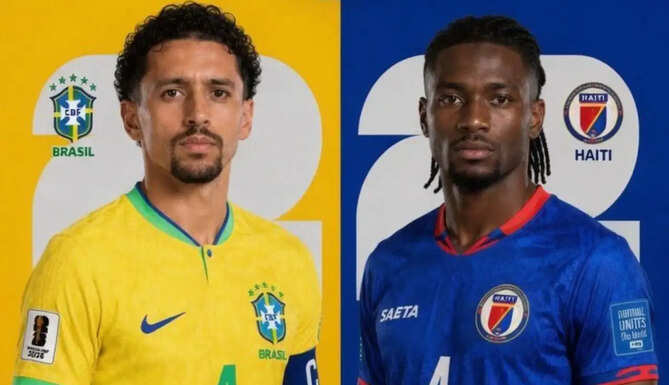
The upcoming Brazil vs Haiti World Cup clash is more than a football match. It is a story of friendship, inspiration, and a connection that once brought peace to a troubled nation.
June 19, 2026: For two unforgettable days, the sound of gunfire disappeared from the streets. The smell of gunpowder no longer hung in the air. In a country long scarred by violence and instability, football achieved what politics and diplomacy often struggle to accomplish.
When Brazil arrived in Haiti for a friendly match in 2004, it was not merely a football game. For many Haitians, it felt like a miracle.
The capital city, Port-au-Prince, transformed into a giant celebration as the reigning world champions touched down. Even today, veteran Haitian journalist Pierre Richard Midi vividly remembers the atmosphere that swept across the nation.
Foreign reporters could hardly believe what they were witnessing.
"Are the Brazilians really playing in Haiti?" they asked in amazement. "It looks like they are playing at home."
The scenes certainly supported that view. Thousands of fans dressed in Brazil's iconic yellow and green jerseys lined the streets. Faces were painted in national colors, and crowds gathered wherever they could. Some even climbed trees just for a glimpse of global superstars like Ronaldo, Ronaldinho, and Roberto Carlos.
Why Haiti Fell in Love With Brazil
Haiti has appeared at the FIFA World Cup only once, back in 1974. Since then, generations of Haitian football fans have searched for a team to support on the sport's biggest stage.
For many, Brazil naturally became that team.
The connection extends beyond football. Over the last few decades, Brazil has played a significant role in peacekeeping efforts, humanitarian assistance, and migration initiatives involving Haiti. Those ties have helped deepen the affection between the two nations.
As a result, Brazil's victories often feel personal to Haitian supporters. The Seleção became more than a foreign team; they became a source of inspiration. That historic 2004 match ended in a heavy 6-0 defeat for Haiti. Yet the scoreline was the least important part of the story.
VAMOS COM TUDO! 🫵💪
— brasil (@CBF_Futebol) June 19, 2026
Chegamos na Filadélfia e HOJE É DIA DE BRASIL! 🇧🇷
Logo mais, às 21:30h (Brasília), seguimos para mais uma etapa do nosso caminho para a glória eterna contra o Haiti. #BateNoPeito
ISSO É BRASIL! VAMOS ACREDITAR! 💚💛 pic.twitter.com/gVoCQDmRPw
Organized with support from the United Nations, the match carried a much larger purpose. At a time when gang violence dominated daily life, football briefly united a divided nation. According to Midi (Veteran Haitian journalist Pierre Richard Midi), something remarkable happened.
"Everyone laid down their weapons for two days and agreed to a ceasefire."
For a country living through conflict, those two peaceful days became one of football's most powerful legacies.
A World Cup Meeting Filled With Emotion
More than two decades later, Haiti has another opportunity to step onto the World Cup stage. This time, fate has created a unique storyline.
Haiti and Brazil have been drawn together in Group C.
Haiti opened its campaign with a narrow 1-0 defeat to Scotland and now faces its second group match against Brazil. While the encounter may be viewed as a crucial game for Brazil's tournament ambitions, the emotions surrounding it are very different in Haiti.
For a nation battling economic hardship, frequent power shortages, and social unrest, football represents far more than results and standings. It remains a source of hope.
The upcoming meeting is therefore not simply another World Cup fixture. It is a reunion between Haiti and the team that has inspired generations of its people.
Haitian football supporter Joel Jean-Baptiste perfectly captures that sentiment. "Brazil feels like a friendly country to us. We have many cultural similarities," he says.
"When we watch them play, we see people who look like us. When they achieve great things on the world stage, we tell ourselves, 'Maybe one day we can do that too.'"
A Match Between Homeland and First Love
When the two teams walk onto the pitch tomorrow morning, millions of Haitians will find themselves emotionally divided.
On one side will be the nation they proudly call home. On the other will be the team they have admired since childhood. For supporters like Joel, it is a rare and emotional dilemma. His eyes may search for Haiti's red-and-blue flag in the stands, but his heart will still recognise the rhythm of Brazilian samba football that has inspired him for years.
That is what makes this match so special.
It is not merely a 90-minute contest between two teams fighting for points. It is a meeting between a country's present and its dreams. It is a reminder of a time when football briefly brought peace to a troubled nation.
And perhaps most importantly, it is proof that no other sport can create such complex emotions—where loyalty, admiration, identity, and hope all collide on the same field.
Only football can tell a story like this.
