

Do FIFA World Cup Awards Come With Cash Prizes? Here's What Golden Ball and Golden Boot Winners Really Get
Many football fans believe FIFA World Cup individual awards come with huge cash prizes. However, FIFA does not directly award money for the Golden Ball, Golden Boot, Golden Glove or Player of the Match. Here's what winners actually receive and why these honours are still worth millions in career opportunities.

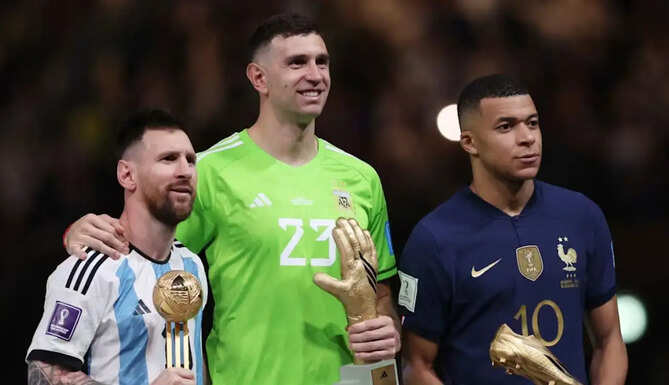
July 14, 2026: Scoring the winning goal, delivering a match-winning performance, or finishing as the tournament's top scorer are achievements every footballer dreams of. Such performances often earn players some of the FIFA World Cup's most prestigious individual honours, including the Player of the Match, Golden Ball, Golden Boot, and Golden Glove awards.
Many football fans believe that these prestigious trophies also come with a substantial cash reward from FIFA. However, the reality is quite different.
Contrary to popular belief, FIFA does not provide any direct prize money to the winners of its individual World Cup awards.
Since the 2002 FIFA World Cup, the Player of the Match trophy has been awarded to the standout performer in every game. The recognition is purely honorary and does not include any financial reward. Similarly, winners of the Golden Ball (Best Player), Golden Boot (Top Scorer), and Golden Glove (Best Goalkeeper) receive their respective trophies without any separate cash prize from FIFA.
These awards are designed to honour exceptional performances on football's biggest stage rather than provide direct monetary compensation.
Recognition Often Leads to Bigger Financial Rewards
Although FIFA does not attach prize money to these individual honours, winning them can have a significant impact on a player's career and earnings.
A standout World Cup performance instantly boosts a player's global reputation and market value. It often attracts interest from elite clubs, increases commercial endorsements, and opens the door to lucrative sponsorship deals. Many players also receive performance bonuses from their clubs or national football federations after successful World Cup campaigns.
In simple terms, while players may not receive a cheque from FIFA for lifting an individual trophy, the recognition can eventually translate into contracts and endorsement deals worth hundreds of crores of rupees.
At the ongoing FIFA World Cup, Lionel Messi and Jude Bellingham have emerged as the leading contenders for the most Player of the Match awards, having won the honour four times each so far.
Close behind them are Kylian Mbappé, Erling Haaland, and Vinícius Júnior, with each player receiving the award on three occasions during the tournament.
Team Prize Money Is Where the Biggest Rewards Lie
While FIFA does not award cash for individual honours, it offers substantial financial rewards based on a team's performance in the tournament.
For the current FIFA World Cup, the champion nation will receive approximately ₹430 crore (around US$50 million) in prize money, making it the highest winners' payout in the tournament's history. The runners-up and other top-performing teams will also receive significant prize money according to FIFA's distribution structure.
This prize money is awarded to the respective national football associations, which then distribute it among players, coaching staff, and other stakeholders according to their own policies and agreements.
Ultimately, FIFA's individual awards are about prestige rather than direct financial gain. While the Golden Ball, Golden Boot, Golden Glove, and Player of the Match trophies do not carry cash prizes, they remain among the most coveted honours in football because of the global recognition and career opportunities they bring. For many players, these awards become the foundation for far greater financial success long after the World Cup comes to an end.
