

ICC Unveils New ODI World Cup 2027 Format: Super Series, Super Seven and More Explained
The ICC has approved a new ODI World Cup 2027 format with Super Series and Super Seven stages, along with major changes to the T20 World Cup 2028.

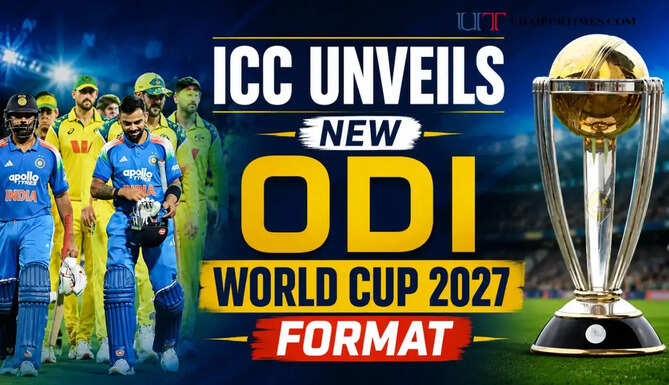
July 16, 2026: The International Cricket Council (ICC) has approved a major overhaul of the formats for the 2027 ODI World Cup and the 2028 T20 World Cup. The new structure introduces a Super Series and Super Seven in the ODI World Cup, while the T20 World Cup will feature a Super 10 stage and new Eliminator matches. The changes were approved during the ICC Annual Conference in Edinburgh following recommendations from the Chief Executives' Committee (CEC).
The 2027 ODI World Cup, which will be jointly hosted by South Africa, Zimbabwe and Namibia, will continue to feature 14 teams. However, the tournament will now follow a three-stage format before the semi-finals and final. According to the ICC, the new structure has been introduced to make every stage of the tournament more competitive and meaningful for both established and emerging teams.
How the new ODI World Cup 2027 format will work
Under the new format, the three lowest-ranked qualified teams (Teams 12, 13 and 14) will first compete in the Super Series, a round-robin stage where only one team will advance. The remaining 11 teams, along with the Super Series winner, will enter Round 2, where the 12 teams will be divided into two groups of six.
Each team will play five group-stage matches. The top three teams from each group, along with the next best-ranked team across both groups, will qualify for the newly introduced Super Seven stage. The seven qualified teams will then play another round-robin league, with each side facing the other six teams once.
The top four teams from the Super Seven standings will qualify for the semi-finals. The first-ranked team will face the fourth-placed side, while the second and third-ranked teams will meet in the other semi-final. The winners will then contest the final to decide the 2027 ODI World Cup champions.
The ICC has announced an exciting revamped format for the Men’s @cricketworldcup 2027 edition in South Africa, Zimbabwe and Namibia 🏆
More details ➡️ https://t.co/VxWr3PFpIX pic.twitter.com/RU1VnCbE9B
— ICC (@ICC) July 15, 2026
The ICC said the new structure has been designed to increase the importance of every match throughout the tournament.
"The structure has been designed to strengthen the competitive narrative across every stage of the event, with matches from Round 1 and Round 2 carrying higher consequence, with a highly competitive Super 7 stage witnessing seven qualifying teams going through a round-robin stage to qualify for the semi-finals."
The governing body added that the revised format will improve the overall fan experience while continuing to provide emerging nations with opportunities to compete on cricket's biggest stage.
ICC also introduces Super 10 format for T20 World Cup 2028
The ICC has also confirmed major changes to the 2028 Men's T20 World Cup. The tournament will continue to feature 20 teams, but the second stage will be expanded from the Super Eight to the Super 10.
The opening stage will now consist of five groups of four teams instead of four groups of five. The top two teams from each group will qualify for the Super 10 stage, where the 10 teams will be divided into two groups of five.
Unlike the previous format, only the table-toppers from each Super 10 group will qualify directly for the semi-finals. The teams finishing second and third in both groups will compete in cross-over Eliminator matches, with the two winners claiming the remaining semi-final spots.
According to the ICC, the new format is aimed at increasing the number of competitive matches while giving emerging cricket nations a better chance of progressing further in the tournament.
The ICC has also outlined the qualification pathway for the 2028 T20 World Cup. Scotland has been granted direct entry into the Europe Regional Final due to exceptional circumstances surrounding the 2026 tournament. Teams that featured in the 2026 T20 World Cup but failed to secure automatic qualification will advance directly to the Global Qualifier, where they will be joined by teams from regional qualifying events across Africa, Asia, Europe, the Americas and the East Asia-Pacific region.
The ICC Board has endorsed the proposed formats, although the final commercial approval is expected after a review by the Finance and Commercial Affairs Committee during its November meetings.
