

The IPL Effect: How Small Towns Became Talent Goldmines
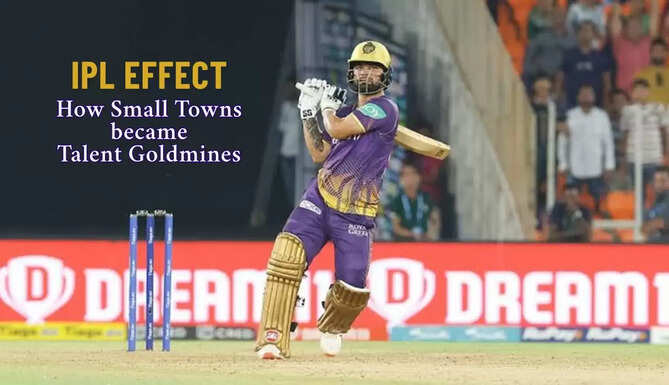
Udaipur, July 24, 2025: It always starts with a dusty cricket ball, a broken bat, and a cousin bowling full speed in slippers. Not in Mumbai. Not in Delhi. But somewhere in Bhilai. Or Amroha. Or the chai-stained corners of a bus stand in Ranchi.
Before the IPL, the map of Indian cricket was a tight circle of metros. Now? It’s a wild scatterplot of towns nobody thought twice about. IPL didn't just bring entertainment; it cracked open a treasure chest buried deep in the heartlands.
Even Winstar Exchange has started showcasing rising stars from these small towns. We’re not talking fairy tales here. We're talking pipelines. Real talent. Real franchises. The IPL didn’t just democratize cricket—it made it gloriously unpredictable.
From Obscurity to Auction: The Unseen Pathways
There’s something poetic and slightly ridiculous about a boy from Chinnappampatti learning to bowl with tennis balls, and a few years later, zipping yorkers past AB de Villiers. But that’s the IPL effect. What once required political connections or elite academy tags now just needs raw skill and a decent highlight reel.
IPL franchises have built scouting networks that stretch from TNPL to dusty school grounds in Jharkhand. They’re not just finding talent—they’re building pipelines.
| Criteria |
Pre-IPL Era |
Post-IPL Era |
| Visibility |
Limited to metro-based academies; small-town talent often overlooked. |
Pan-India scouting camps reaching remote areas; increased use of digital platforms for talent discovery. |
| Selection Process |
Influenced by state-level politics and biases; meritocracy often compromised. |
Data-driven, performance-based analytics ensuring fair evaluation. |
| Entry Point to Professional Cricket |
Predominantly through the Ranji Trophy, a prolonged and less visible route. |
IPL trials offering a direct and prominent shortcut to the national spotlight. |
| Support Systems |
Sparse and unstructured; players lacked access to professional guidance. |
Comprehensive mentorship programs, including access to nutritionists, physiotherapists, and mental conditioning coaches. |
| Financial Opportunities |
Minimal earnings unless selected for the national team; financial instability common. |
Lucrative contracts from the outset, providing financial security and enabling focus on performance. |
Take T. Natarajan, for instance. Spotted in the TNPL, picked by Kings XI Punjab, then Sunrisers Hyderabad—his yorker spree earned him an India cap. And he started with no shoes and no stadium in sight. His story isn’t a fluke. It’s a blueprint.
From Backyard Bowler to Brand Ambassador
Picture this: you're 17, there's one TV in the house and it's mostly used for news or wedding videos, your dad calls cricket timepass, and a year later, you're doing interviews with sponsor logos behind you, wondering how to pronounce endorsement. That's the IPL transformation package—available now in small towns near you.
The league mass-produces role models. And for every IPL auction, there’s a small-town story waiting to crash prime time.
Top 5 IPL stars from small towns who rewrote the script:
- T. Natarajan – Chinnappampatti, Tamil Nadu. A weaver’s son who didn’t bowl with a leather ball till 20, scouted via TNPL, and now the “Yorker Machine” of India.
- Mohammed Siraj – Toli Chowki, Hyderabad. Auto-rickshaw driver’s son. Learned to bowl fast on a concrete pitch. Now bowls at 145 km/h and breaks top orders.
- Rinku Singh – Aligarh, Uttar Pradesh. Lived in a two-room home with five siblings. KKR signed him, Gujarat Titans regretted it—especially after five sixes in five balls.
- Rahul Tewatia – Sihi, Haryana. Almost dropped by every team he played for… until he casually smashed five sixes in one over and became a meme-turned-hero.
- Shivam Mavi – Noida (pre-mall era). U-19 World Cup champ. KKR grabbed him fast. Still bowls with the fury of someone who had to explain “fast bowler” to aunties at weddings.
These aren’t PR stories. They’re proof that you don’t need an elite academy or fluent English—just grit, a wicked yorker, and maybe a scout with Wi-Fi.
According to research from the Centre for the Study of Developing Societies (CSDS), post-IPL years have seen a 32% rise in professional cricketers from non-metro regions. Another study from the International Journal of Sports Science & Coaching confirms what we already know: the IPL turned India’s forgotten corners into cricket’s golden grid.
Local Economies, Global Scouts: The Butterfly Effect
You think it’s just about cricket? Think again. When a town like Muzaffarpur sees one of their own on national TV, it’s not just family group chats that explode but also the local economy.
Coaching centres suddenly have waitlists. Hotels near local stadiums are booked solid during trials. And parents, previously the study first, cricket later ambassadors, begin whispering things like, “Beta, tryouts kab hain?” The IPL upgrades the entire zip code.
| Sector |
Direct Impact |
Indirect Benefit |
| Sports Academies |
Surge in enrollments at places like Sonnet Cricket Club (Delhi) or Sehwag Cricket Academy (Jhajjar) |
Increased demand for local trainers, fitness coaches, and equipment vendors |
| Real Estate |
Spike in land value near training hubs like Baroda Cricket Association Ground |
Rise in rental housing for outstation players, IPL scouts, and support staff |
| Local Economy |
Trials and league matches bring footfall to Tier-2/3 towns like Hisar and Raipur |
Boost in revenue for dhabas, local transport, sports goods stores, and hospitality services |
| Education & Career Shifts |
Rise in hybrid schools like The Sports School (Bengaluru) offering sports + academics |
Normalization of sports as a viable career option among students and parents |
| Media Attention |
Local press like Dainik Jagran covering hometown heroes |
OTT platforms and national media investing in documentaries on players (e.g., Cricket Fever) |
And yes, platforms like Winstarexch play a surprisingly positive role: amplifying hometown stories, highlighting rising players, and giving fans from the same gallis a front-row seat to success.
Now, for the numbers, there’s nothing better than cold, hard data. According to a 2019 KPMG report on Indian sports, the number of private cricket academies grew by over 30% between 2010 and 2018, particularly in states like Uttar Pradesh, Haryana, and Madhya Pradesh.
A FICCI-Turkey study noted that regional sports infrastructure investment grew 22% year-over-year post-IPL, primarily in districts with IPL-linked players.
Take Rinku Singh again: after his IPL success, coaching centers in Aligarh reported a 40% increase in admissions within a year. And in Ranchi? Since Dhoni's rise, even budget hotels near JSCA stadium rebranded themselves with cricket-themed rooms. Subtle, right?
In short, every time a small-town boy lifts a bat, an entire ecosystem quietly lifts with him.
Conclusion
As if that weren't enough, the IPL ripped up the playing field and rebuilt it, presumably with LED lights and drone cameras. Where once selectors said, “He’s from where now?” they’re now booking train tickets to places Google Maps needs help finding. And that mantra? It’s no longer whispered—it’s screamed between sixes and samosas.
DISCLAIMER
ADHERENCE TO GUIDELINES ON ONLINE ADVERTISING ISSUED BY ADVERTISING STANDARDS COUNCIL OF INDIA (ASCI)
This is a Collaborative Post published as provided and UdaipurTimes does not endorse any information provided in this post. This may involve an element of financial risk and may be addictive. Please act on your own accord.
