

Why Experts Claim That SIM Binding Would Backfire: Explained
India’s proposed SIM Binding mandate for messaging apps like WhatsApp and Telegram aims to curb cyber fraud—but experts warn it may disrupt users, raise privacy concerns, and expose technical limitations - writes Santhosh Kumar

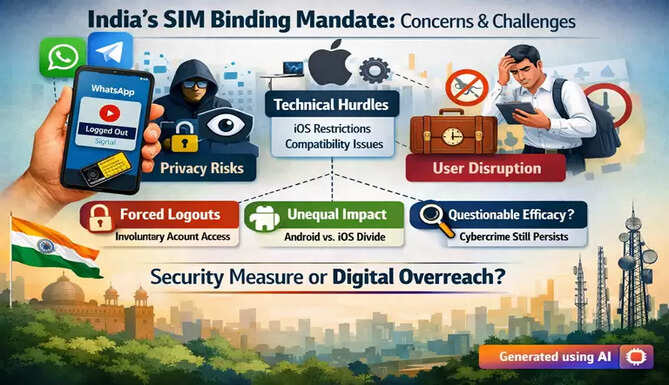
Udaipur, Jan 17, 2026: The recent mandate of the Indian government think tanki to implement SIM Binding for mobile based social messaging platforms indicates a significant shift in the governments digital policy. While the intention of the regulators and government is about better traceability and tighter compliance, technology experts are having their reservations - they say such a mandate will expose a disconnect between regulatory expectations and operational realities.
What is SIM Binding
As per this mandate, messaging applications like WhatsApp, Telegram, and Signal must immediately log out account holders if their registered SIM becomes inactive, is taken out of the device, or is placed into another phone. This automated logout must take place within 6 hours, says the regulation. According to analysis by experts, this mandate is being positioned as a strong countermeasure against cyber fraud and the misuse of foreign-originating SIM cards.
Questions on Feasibility
The policy regarding SIM Binding raises significant concerns about its technical feasibility, user rights, and potential long-term repercussions on India's digital ecosystem. Although aimed at enhancing traceability and improving KYC compliance to combat rising cybercrime, the policy overlooks the complexities of digital fraud, where criminals exploit forged papers and outdated telecom databases. This will result in legitimate users facing severe disruptions, including forced logouts from communication apps, undermining their business operations and personal interactions.
Technical Challenges
Furthermore, the technical implementation poses challenges, particularly on iOS, where continuous SIM monitoring contravenes Apple's privacy regulations, making equitable enforcement across platforms unfeasible. Consequently, the policy does not align with the realities of modern communication technologies and the needs of users.
Mandate vis-a-vis Digital Inclusion
The new SIM Binding mandate in India risks creating inequality between Android and iOS users, as it imposes stricter rules on one group. Experts warn that this can lead to government overreach and potential privacy violations, as authorities may extend their control to areas like message scanning and metadata retention. The policy, as per experts, is built on a shaky foundation, with India’s telecom data being unreliable due to outdated or false records. Furthermore, the claim that foreign SIMs are the main source of online fraud is misleading, as most incidents occur domestically. Industry players were caught off guard by the rapid implementation timeline and were not included in discussions, forcing them to shift focus from innovation to compliance. This could slow growth in India’s digital economy and hinder the ability of startups to navigate the new regulations.
What Experts Suggest
Experts advocate improved cybersecurity at the device level instead of imposing strict rules on communication platforms. Their solution targets real threats like malware, phishing, and ransomware, offering deep scanning and real-time protection. The focus should be on using AI-driven behavioral analysis to enhance India’s cybersecurity instead of outdated identity controls.
#SIMBinding #DigitalPolicyIndia #CyberSecurity #MessagingApps #PrivacyConcerns #TechRegulation #DigitalIndia #StartupEcosystem #RajasthanTech #UdaipurNews
FAQ Section
Q1. What is SIM Binding in messaging apps?
SIM Binding requires messaging apps to automatically log users out if their registered SIM becomes inactive, is removed, or inserted into another device.
Q2. Why is the Indian government proposing SIM Binding?
The policy aims to improve traceability, strengthen KYC compliance, and curb cyber fraud involving mobile-based communication.
Q3. Why are experts opposing the SIM Binding mandate?
Experts argue it is technically infeasible, risks privacy violations, disrupts legitimate users, and does not effectively address the root causes of cybercrime.
Q4. Does SIM Binding affect Android and iOS users equally?
No. iOS restricts continuous SIM monitoring due to privacy rules, making uniform enforcement across platforms difficult.
Q5. What alternatives do experts suggest?
Experts recommend AI-driven device-level cybersecurity, real-time threat detection, and behavioral analysis instead of rigid SIM-based identity controls.
