

iPhone 18 Pro Max vs Samsung Galaxy S26 Ultra: 10 Key Differences You Must Know
Apple’s iPhone 18 Pro Max and Samsung’s Galaxy S26 Ultra offer premium cameras, powerful processors and advanced AI features. Compare their 10 major differences, including display, zoom, battery, storage and privacy, before choosing your next flagship smartphone.

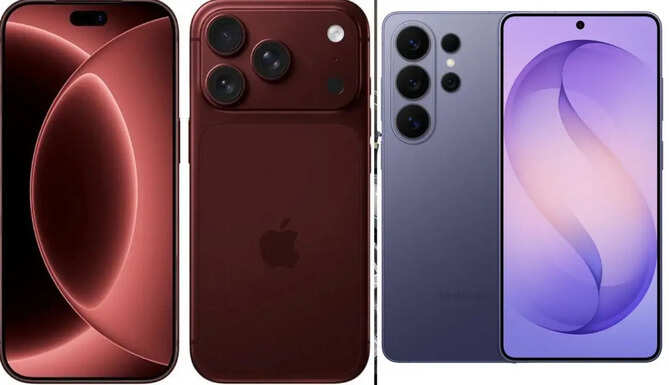
October 10, 2026: The competition between Apple and Samsung in the premium smartphone market has always attracted attention. Apple’s iPhone 18 Pro Max focuses on advanced cameras, professional video recording and Apple Intelligence. Meanwhile, the Samsung Galaxy S26 Ultra features a 200-megapixel main camera, 100x AI-powered Space Zoom and a built-in Privacy Display.
The two flagship smartphones differ in several key areas, including their cameras, processors, batteries, displays, storage options and AI features.
Let’s look at the 10 major differences between these smartphones to help you decide which one may be more suitable for your needs.
1. Design and Weight
The iPhone 18 Pro Max features an aluminium unibody design, with Ceramic Shield 2 on the front and Ceramic Shield on the back. It weighs 249 grams and is available in Black, Silver, Glacier and Burgundy colour options.
In comparison, the Samsung Galaxy S26 Ultra features an Armor Aluminium frame, Corning Gorilla Glass protection and water resistance. It weighs 214 grams, making it 35 grams lighter than the iPhone. This difference may make the Samsung phone more comfortable to hold during extended use.
2. Display: Brightness vs Privacy Technology
The iPhone 18 Pro Max features a 6.9-inch Super Retina XDR OLED display with a resolution of 2,868 × 1,320 pixels and a pixel density of 460 ppi. ProMotion technology supports a refresh rate of up to 120Hz. The phone also offers an Always-On display and Dynamic Island, while its stated peak outdoor brightness reaches up to 3,000 nits.
The Samsung Galaxy S26 Ultra features a 17.49 cm display and includes built-in Privacy Display technology. This feature helps limit the screen’s visibility from different viewing angles. It can also help protect sensitive information, such as selected apps, notifications and password-entry screens, from people nearby.
While the iPhone focuses on display brightness and its familiar OLED experience, Samsung’s key advantage is its additional screen privacy protection.
3. Processor and Performance
The iPhone 18 Pro Max is listed with Apple’s A20 Pro chip. Its stated specifications include a six-core CPU, a seven-core GPU with neural accelerators and two 16-core Neural Engines. It also supports hardware-accelerated ray tracing, which can produce more realistic lighting and reflections in supported games and graphics applications.
The Samsung Galaxy S26 Ultra uses the Snapdragon 8 Elite Gen 5 for Galaxy processor. Samsung claims that, compared with the previous Galaxy S25 Ultra, it delivers 39% better AI performance, 24% better graphics performance and 19% faster CPU processing. The company also claims a 21% improvement in thermal management through its updated cooling system.
These figures are based on Samsung’s own comparisons. Actual performance will depend on the applications, games, software and tasks being used.
4. Rear Camera: 48MP vs 200MP
The iPhone 18 Pro Max features a 48-megapixel Pro Fusion camera system. It includes a 48MP main camera, a 48MP ultra-wide camera and a 48MP telephoto camera. The main camera has a variable aperture, while other features include 48MP macro photography, ProRAW and advanced portrait controls.
The Samsung Galaxy S26 Ultra features a 200MP main camera, a 50MP ultra-wide camera and a 50MP telephoto camera. Its main camera has an f/1.4 aperture, while the telephoto camera has an f/2.9 aperture.
Although Samsung offers a higher megapixel count, camera quality cannot be judged by megapixels alone. Sensor size, lens quality, image processing, lighting and software also play important roles in producing good photographs.
5. Zoom and Low-Light Photography
The iPhone 18 Pro Max offers 2x and 4x telephoto options, along with up to 8x optical-quality zoom. According to the provided specifications, its optical-quality zoom range extends up to 16x, while digital zoom reaches up to 40x.
One of the biggest attractions of the Samsung Galaxy S26 Ultra is its 100x AI-powered Space Zoom. This feature helps capture distant subjects, while Samsung has also introduced improvements to night photography. Its wider aperture and sensor-based noise reduction are designed to retain more detail in low-light photos and videos.
Samsung’s high-zoom capabilities may appeal to users who frequently photograph distant subjects. The iPhone, meanwhile, focuses on advanced video recording and professional photography controls.
6. Video Recording
The iPhone 18 Pro Max offers several advanced video features aimed at content creators. Its main camera can record 4K Dolby Vision video at up to 120 frames per second. Other listed features include ProRes, ProRes RAW, Apple Log 2, Genlock support, spatial video, macro video recording and advanced audio controls.
The Samsung Galaxy S26 Ultra features Super Steady with Horizontal Lock. This technology uses motion sensors to help keep the horizon level, even when the phone rotates. Samsung also focuses on retaining detail and reducing noise during low-light video recording.
The iPhone may be more appealing to creators who need professional recording formats and greater control over their footage. Samsung’s stabilisation features may be useful for recording smoother videos while walking or moving.
7. Battery and Charging
The iPhone 18 Pro Max is listed as offering up to 43 hours of video playback and 38 hours of streaming video playback. The supplied specifications also mention up to 29 hours of battery performance under general use. With a compatible adapter rated at 60W or higher, the phone is stated to reach a 50% charge in approximately 15 minutes.
The Samsung Galaxy S26 Ultra features a 5,000mAh battery. Samsung claims up to 31 hours of video playback, while the phone is reported to charge to 75% in approximately 30 minutes.
The iPhone has a higher stated video playback figure, while Samsung specifies its battery capacity and charging performance. However, these figures may come from different testing methods, so they should not be compared directly without considering the conditions. Actual battery life will depend on screen brightness, network connectivity, gaming and other usage patterns.
8. Storage and Memory
The iPhone 18 Pro Max is listed with storage options of 256GB, 512GB, 1TB and 2TB. The 2TB version may be particularly useful for users who store large photo libraries, high-resolution videos and other media files.
The Samsung Galaxy S26 Ultra is available with 256GB, 512GB and 1TB of storage. The 256GB and 512GB variants come with 12GB of RAM, while the 1TB variant offers 16GB of RAM.
The iPhone has the advantage in maximum storage capacity. However, Samsung’s 16GB RAM option may benefit users who regularly multitask or run demanding applications.
9. AI Features and Operating System
The iPhone 18 Pro Max is listed with iOS 27 and Apple Intelligence. Its features include Siri integration, voice commands, Type to Siri and assistance with various everyday tasks.
The Samsung Galaxy S26 Ultra runs One UI 8.5 and includes Galaxy AI features such as Now Nudge, Now Brief, Creative Studio, AI-assisted photo editing and Circle to Search. Users can also interact with Bixby to control supported phone settings and ask questions conversationally.
Another advantage of Samsung is that supported Galaxy AI features offer on-device or cloud processing options. This gives users more control over how certain AI tasks are processed, depending on the feature.
The usefulness of these tools will depend on individual needs, language support, regional availability and software updates.
10. Privacy, Security and Connectivity
The iPhone 18 Pro Max features Face ID, Wi-Fi 7, Bluetooth 6, 5G, Thread networking and USB 3.0 data transfer speeds of up to 10Gbps. Its listed SIM options include nano-SIM and eSIM support, with dual-SIM functionality depending on the configuration.
The Samsung Galaxy S26 Ultra combines its Privacy Display with security technologies such as Samsung Knox Vault, Samsung Knox and Knox Matrix. It also supports Quick Share, which can be used to transfer files between compatible devices. File sharing with supported Apple devices may also be available through compatible Quick Share and AirDrop functionality.
Both companies offer their own security and privacy features. The better option will depend on which devices, services and operating systems you already use.
Which Phone Is Better to Buy?
The iPhone 18 Pro Max and Samsung Galaxy S26 Ultra are premium smartphones designed for different user preferences.
The iPhone’s key attractions include advanced video recording, professional camera controls, storage options of up to 2TB and integration with the Apple ecosystem. Samsung stands out with its 200MP main camera, 100x Space Zoom, built-in Privacy Display and range of Galaxy AI features.
There is no single winner in every category. The iPhone may suit video creators and people who already use Apple devices. The Samsung Galaxy S26 Ultra may be a better fit for those who prioritise long-range photography, screen privacy and AI-powered tools.
