

Renault Duster Hybrid Launched at ₹16.99 Lakh: Check Mileage, Features and Price
Renault has launched the Duster Hybrid in India at a starting price of ₹16.99 lakh. The strong-hybrid SUV claims a mileage of 29 km/l and offers two electric motors, advanced safety features and a range of premium equipment.

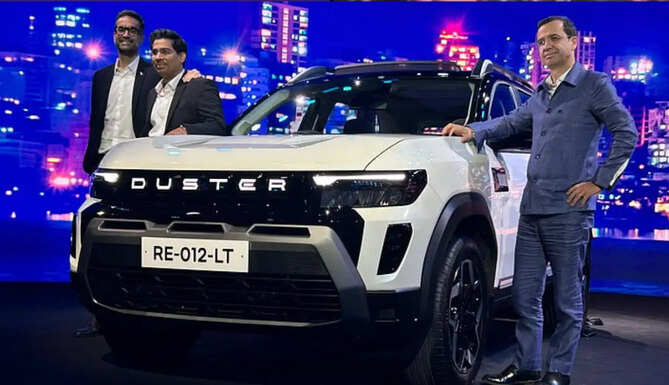
October 10, 2026: Want to reduce your fuel costs without compromising on the bold looks and performance of an SUV? Keeping these buyers in mind, Renault has launched the new Duster Hybrid in India, with prices starting at ₹16.99 lakh. The company claims that the strong-hybrid SUV can deliver a mileage of up to 29 km/l. Renault also claims that the car can run on electric power for up to 80% of the time in certain city driving conditions. The new hybrid version features two electric motors, a small battery pack and a petrol engine. Bookings have already opened, and deliveries are expected to begin on November 6.
How much does the Renault Duster Hybrid cost?
The new Duster Hybrid is available in three variants: Evolution, Techno and Emotion. The starting price is ₹16.99 lakh for the Evolution variant, while the Techno costs ₹18.99 lakh and the top-spec Emotion variant is priced at ₹19.49 lakh. All prices are ex-showroom. Customers can book the car through Renault's official website or authorised dealerships with a deposit of ₹21,000. According to the published price list, these prices are applicable to bookings made until December 31, 2026. Buyers who choose the dual-tone colour option will have to pay an additional ₹20,000.
The petrol-powered Duster is also available in India. The base Authentic variant, equipped with a 1.0-litre turbo-petrol engine, starts at ₹10.49 lakh. Meanwhile, the 1.3-litre turbo-petrol mild-hybrid variants are priced from ₹12.99 lakh to ₹18.49 lakh. This means buyers will have to pay more for the strong-hybrid version than for the regular petrol models. Whether the additional cost can be recovered through fuel savings will depend on how much the car is driven and its actual fuel efficiency.
1.8-litre engine with two electric motors
The biggest change in the Duster Hybrid is under the bonnet. It features a 1.8-litre naturally aspirated petrol engine paired with two electric motors and a 1.4 kWh battery pack. The system produces a combined output of 160 PS, while the electric motor delivers 208 Nm of torque. Power is sent to the front wheels through an eight-speed dedicated hybrid transmission.
Renault claims that the Duster Hybrid delivers a fuel efficiency of 29 km/l under the ARAI test cycle. According to the company's estimates, the SUV can cover more than 1,400 km on a full tank. However, the actual driving range will depend on the fuel tank capacity, driving style, road conditions, traffic and weather. Real-world mileage may differ from the figures recorded under test conditions.
Claims to run on electric power for 80% of the time in city traffic
One of the main benefits of hybrid technology is that the car does not rely solely on its petrol engine. Depending on driving conditions, the electric motors can also power the vehicle. Renault claims that the Duster Hybrid can run in electric mode for up to 80% of the time on city roads. This could help reduce fuel consumption, especially in stop-and-go traffic.
In terms of performance, the hybrid version produces a combined 160 PS. In comparison, the 1.3-litre turbo-petrol version produces 163 PS and 280 Nm of torque. Although the hybrid has a slightly lower power output, its electric motor can provide additional torque when needed. Renault claims that the Duster Hybrid can accelerate from 0 to 100 km/h in 9.6 seconds.
New suspension technology aims to improve ride comfort
Renault has equipped the new hybrid version with Frequency Dependent Damper (FDD) technology. This system adjusts the suspension response according to road bumps and vibrations, helping improve ride comfort on uneven surfaces.
However, the battery pack reduces the boot space in the hybrid version. While the regular petrol Duster offers 518 litres of boot space, the hybrid version provides 372 litres. This reduction is due to the battery's placement beneath the floor. Buyers who frequently travel with family or carry large amounts of luggage should consider this difference before making a purchase.
What are the features and safety equipment?
The Duster Hybrid retains the SUV's familiar muscular design. It features LED headlamps, integrated LED tail lamps and 18-inch alloy wheels. The hybrid version also gets illuminated 'Duster' lettering on the grille, along with 'E-Tech' badges on the front doors and rear tailgate.
Inside, the cabin gets a new Dune Brown leatherette seat upholstery option, while the overall dashboard layout remains similar to that of the regular Duster. Key features include a 10.1-inch touchscreen infotainment system, a 10.25-inch digital instrument cluster, an electrically operated tailgate, a wireless phone charger, dual-zone climate control and a panoramic sunroof. The front seats are electrically adjustable in six directions and feature ventilation. Wireless Android Auto and Apple CarPlay are also supported.
Safety features include six airbags, Level 2 Advanced Driver Assistance Systems (ADAS), Electronic Stability Control, Hill Hold Assist, four-wheel disc brakes, a tyre pressure monitoring system, a 360-degree camera, front and rear parking sensors, and ISOFIX child-seat mounts. According to the report, the SUV has received a five-star safety rating from Bharat NCAP.
Toyota and Maruti hybrid SUVs offer competition
The Renault Duster Hybrid will compete with the Toyota Urban Cruiser Hyryder, Maruti Suzuki Grand Vitara and Maruti Suzuki Victoris in India. Competition could increase further if Kia introduces a hybrid version of the Seltos in the future. The report also suggests that the Nissan Tekton, which is based on the same platform, is unlikely to receive a strong-hybrid powertrain.
With prices starting at ₹16.99 lakh, the Renault Duster Hybrid targets buyers who want the practicality and road presence of an SUV with improved fuel efficiency. However, the claimed mileage of 29 km/l should be treated as a test-cycle figure rather than a guarantee of real-world performance. Before buying, customers should consider their daily driving distance, annual mileage and expected fuel savings to determine whether the hybrid version offers good value for money.
