

TRAI New Recharge Rules: Voice and SMS Plans Get More Options for Users
TRAI has changed recharge rules for voice and SMS users. Check what the new rules mean for Jio, Airtel, Vi and customers without regular data needs.

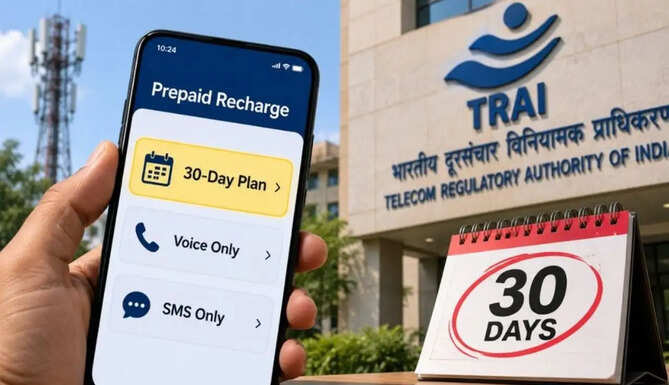
September 28, 2026: The Telecom Regulatory Authority of India (TRAI) has introduced new rules for mobile recharges. Under the new rules, telecom companies will have to offer more recharge options that do not include mobile data. The tariffs for these plans will also have to be lower. As a result, Jio, Airtel and Vodafone Idea customers will have more options to choose voice and SMS-only plans without paying for mobile data.
TRAI said the aim of this change is to provide more affordable calling options to customers. The new rules are expected to be particularly useful for low-income customers, senior citizens and people who mainly rely on Wi-Fi for internet access. Those who use very little mobile data will no longer have to pay for data they do not need.
What Is in the New Rules?
According to the revised rules, Reliance Jio, Bharti Airtel and Vodafone Idea (Vi) will have to offer voice and SMS-based plans with a validity of 30 days or less. These companies currently offer several plans that combine calling, SMS and data.
The voice and SMS-based plans should be priced lower than the corresponding plans that include data. In other words, the tariff should be reduced in line with the removal of data benefits.
Telecom companies must also offer at least one voice and SMS-based plan that can be recharged on the same date every month. If that date does not exist in a particular month, the plan can be renewed on the last day of that month.
In addition, companies will have to offer at least one long-duration voice and SMS-based voucher that is comparable to the long-term bundled plan they offer.
Why Did TRAI Introduce This Rule?
TRAI said it had observed that telecom companies were offering a limited number of voice and SMS-based Special Tariff Vouchers (STVs). Most of these were long-term plans, resulting in fewer affordable short-term recharge options for customers with lower incomes.
To address this issue, TRAI published the draft Telecom Consumer Protection (Thirteenth Amendment) Regulations, 2026, on April 7, 2026, and invited public comments.
A total of 1,132 comments were received from stakeholders on the issue. TRAI then held an Open House Discussion on June 15, 2026. After reviewing the comments and analysing the feedback, TRAI finalised the amendment.
What Will Be the Benefits for Ordinary Mobile Customers?
For customers who do not need mobile data or use very little of it, the new rules will provide more recharge options. For example, people who mainly use their phones for calls and SMS and rely on Wi-Fi for internet access will not have to choose a bundled plan with data. Instead, they can select a voice and SMS-only plan.
However, the exact amount customers can save will depend on how Jio, Airtel and Vi price their new plans.
The option to recharge on the same date every month may also make it easier for customers to remember their recharge date. Currently, many prepaid plans have a validity of 28 days, which means customers do not necessarily recharge on the same date every month.
Will the 28-Day Plans Change This Time?
There is no requirement to convert all 28-day plans into 30-day plans under the new rules. The main aim of TRAI's amendment is to increase the availability of voice and SMS-based plans, provide a monthly renewal option and keep the tariffs for these plans reasonably low.
Currently, many prepaid plans have a validity of 28 days. As a result, customers may need to recharge 13 times a year instead of 12 to maintain continuous service.
For example, a ₹299 plan with a validity of 28 days would cost ₹3,887 after 13 recharges. A plan with the same ₹299 price and a 30-day validity would cost ₹3,588 after 12 recharges, providing 360 days of service. This is only an example and assumes that the price of the plan remains unchanged.
Therefore, the new amendment does not directly require all 28-day plans to be changed to 30-day plans. The main focus is on providing more voice and SMS-only recharge options, monthly renewal choices and suitable lower tariffs for customers who do not need mobile data.
