

Ajit: The Villain Whose Silence Was Menacing, Statements Were Deliberate and Authority Was Assumed
He created a signature villain who was defined by a soft spoken demeanour that was vicious in delivery, impactful and sophisticated

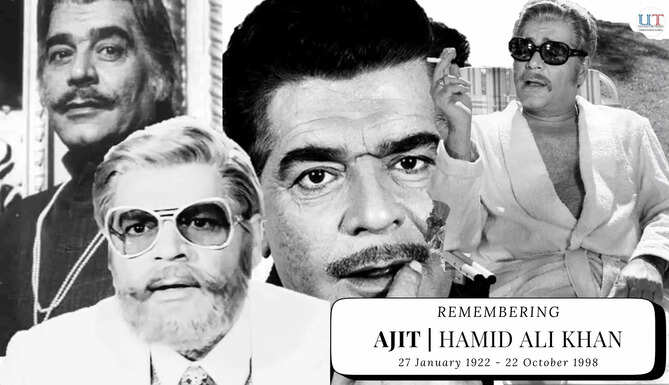
Udaipur, Jan 27, 2026: Ajit, the actor who redefined villainy in Hindi cinema, created an enduring benchmark for stylised character acting. His screen presence and controlled menace have often been compared to legendary international actors like Marlon Brando and Robert De Niro. Before becoming Bollywood’s most iconic villain in the 1960s and 1970s, Ajit played a wide range of character and romantic roles.
Born as Hamid Ali Khan on January 27, 1922, in Shahjahanpur, Uttar Pradesh, Ajit hailed from a Muslim family belonging to the Pashtuni Barozai clan, whose ancestors migrated from the Kandahar region of Afghanistan. He was brought up in Hyderabad, where his father worked as the personal driver of Osman Ali Khan, the Nizam of Hyderabad.
Early Struggles in Mumbai and the Road to Stardom
Bollywood archives recount that when Ajit arrived in Bombay (now Mumbai), he carried only a small sum of money—raised by selling his college books—after running away from home. Once that money ran out, he lived in cement pipes along Mohammed Ali Road. Refusing to pay weekly protection money to the local mafia controlling these shelters, Ajit earned a reputation for fearlessness and integrity.
Determined to become an actor, he began working as an extra in films during the 1940s, using his real name, Hamid Ali Khan. His first lead role came opposite Geeta Bose in the 1946 film Shahe Misra. Despite several romantic lead roles in films like Hatim Tai, Sikander, Aap Beeti, Sone Ki Chidiya, Dholak, and Chanda Ki Chandni, box-office success remained elusive.
The Birth of a New Kind of Villain
Ajit transformed Bollywood’s portrayal of villains. At a time when antagonists were loud, brutal, and hands-on, he introduced elegance, restraint, and psychological dominance. His villains were soft-spoken, impeccably dressed, and chillingly composed. He never performed the dirty work himself—his authority ensured that henchmen like Pran, Jeevan, Kader Khan, Sujit Kumar, and Ranjeet carried out his orders.
Director Nana Bhai Bhati suggested shortening Hamid Ali Khan’s name to Ajit during the 1950 film Beqasoor. Though recognition came slowly, films like Nastik and Naya Daur in the 1950s brought him visibility. His definitive breakthrough as a villain arrived with the 1966 film Suraj, cementing his status as Bollywood’s most stylised antagonist.
Ajit also popularised the cinematic image of the suave smuggler surrounded by henchmen with Western names—Michael, Robert, Peter, Mona—creating a template followed by generations of filmmakers.
Iconic Filmography and Legacy
Ajit’s filmography reads like a masterclass in character acting. His memorable performances include Naya Daur, Prince, Jeevan Mrityu, Heer Ranjha, Lal Patthar, Zanjeer (“Lilly, don’t be silly”), Yaadon Ki Baraat (“Mona Darling”), Jugnu, Khote Sikkey, Kalicharan (as Seth Deendayal, famously declaring, “Log mujhe 'Loin' ke naam se jaante hain”), Charas, and Heeralal Pannalal.
In the 1980s and 1990s, he appeared in supporting roles in films like Aatish, Betaaj Badshah, Aa Gale Lag Jaa, Gangster, and Criminal. Even in modern settings, Ajit’s commanding screen presence remained unmatched. Criminal was his final film before his death on October 22, 1998.
Ajit remains immortal as the man who gave Bollywood its most sophisticated villain—an identity that continues to influence Hindi cinema even today.
#Ajit #BollywoodVillain #HindiCinema #FilmHistory #ClassicBollywood #UdaipurNews #RajasthanNews #UdaipurCulture #IndianCinema #FilmLegends
