

India Plans Indigenous Space Station and NavIC by 2035: Dr. Nilesh M. Desai, Director, SAC, ISRO

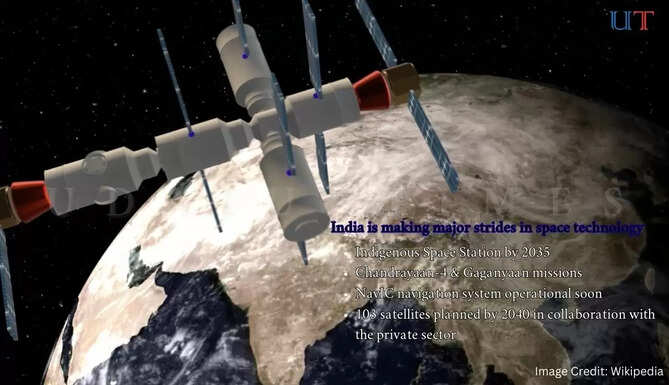
Udaipur, Aug 29, 2025: "India is set to establish its own space station by 2035, with initiatives already underway. In the coming years, India will also introduce its own indigenous navigation system, NavIC, which will serve as its version of GPS. As per the five year plan, a device is being developed to replace mobile phones in India, ensuring seamless communication from anywhere globally through a satellite-based system. India is making significant strides in the field of space science and has devised a strategy extending to 2062."
Dr. Nilesh M. Desai, Director of the Space Applications Center at ISRO, Ahmedabad, shared this information during a discussion with media personnel at the Aravali Institute of Technical Studies in Umrada on Friday. Dr. Desai visited Udaipur to inaugurate a two-day exhibition on space science organized at the institute. The exhibition is showcasing the remarkable accomplishments of the Indian Space Research Organization (ISRO), attracting students from various local schools eager to learn about India's advancements in space science. It features models of rocket launch vehicles (such as PSLV and GSLV), replicas of notable satellites and spacecraft (including Chandrayaan and Mangalyaan), a timeline of India’s journey in space, future plans, and motivational talks for students and young people.
Dr. Desai noted that India did not participate in the founding of the International Space Station that was jointly developed by 6 other nations. However, India is now making strides toward creating its own space station. Following the announcement by Prime Minister Narendra Modi and the roadmap laid out by ISRO, a deadline of 2035 has been established. The space station will consist of five modules, with the first phase slated for development between 2028 and 2035. Rs. 22,000 Cr have been approved for the first phase. The initial goal is to set up the station in conjunction with the launch of the main Gaganyaan mission, which has this budget earmarked for it. Three Gaganyaan missions will be unmanned, focusing on various tests, and subsequent to their success, two missions will be crewed.
Dr. Desai indicated that Chandrayaan-4 is expected to be launched between 2028 and 2029, with preparations already in progress. India plans to launch 103 satellites from 2025 to 2040, with 40 to 45 currently under development, while the remaining will be tailored to meet emerging demands. The satellite launches will be jointly conducted by ISRO in collaboration with the private sector.
He explained that present mobile devices function using direct-to-device technology. In the next few years, this will be supplanted by a small, lightweight device that won’t require frequent recharging and will facilitate communication anywhere in the world. A satellite is being planned for launch to enable this, and efforts are ongoing to implement it within the next five years. The United States has made advancements in this area, and it is likely that such a device may soon be operational there.
Dr. Desai also talked about the indigenous navigation system NavIC, noting that it has been under development for many years. ISRO engineers are gradually overcoming the challenges as they continue to work on it. He mentioned that within the next year and a half, NavIC is expected to become operational, which will greatly benefit both the military and the general public. He pointed out that currently, locating a missing soldier can be quite challenging; however, once NavIC is operational, this issue will be much easier to address. A wristwatch-like device will be provided to soldiers, which will continuously track and relay their location. As this is a homegrown system, India will not need to rely on any foreign technology.
#IndiaSpaceStation #ISRONews #NavICGPS #Chandrayaan-4 #GaganyaanMission #UdaipurExhibition #IndianSatellites #IndianSpaceProgram #SpaceTechnologyIndia #SpaceScienceEducation
