

Fractured Minds, Stalled Science: Toxic Academic Culture and the Mental Health Crisis Among India’s PhD Scholars
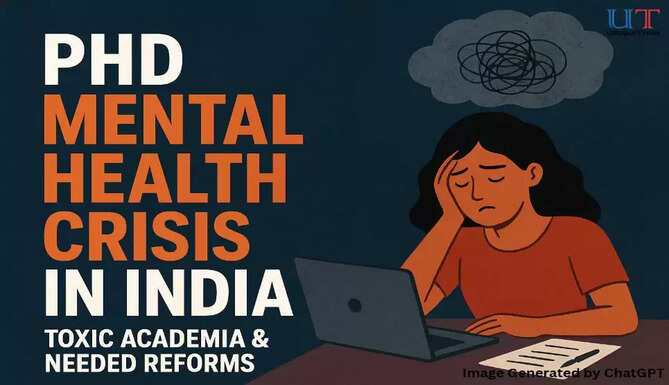
In India’s academic system, a supervisor along with the controls almost every aspect of a scholar’s research journey. While many mentors are supportive, several reports highlight instances of abusive supervision, verbal harassment and exploitation

Contributed by:Shreya Sangwan & Divya
Udaipur, Sept 09, 2025: India prides itself on being a hub for cutting-edge research and higher education, with institutions producing world-class scientists and academics. Yet, beneath this glossy surface lies an alarming reality: a growing mental health crisis among PhD scholars.
For many, pursuing a doctorate represents intellectual freedom and professional growth. But for thousands of scholars across India, the journey is marred by toxic departmental cultures, exploitative hierarchies, administrative neglect and emotional isolation. Increasingly, these pressures are leading to anxiety, depression, burnout and tragically even loss of life.
One of the most significant challenges PhD scholars face is the unchecked authority of supervisors. In India’s academic system, a supervisor along with the controls almost every aspect of a scholar’s research journey. From topic approvals to signing scholarships and thesis submissions. While many mentors are supportive, several reports highlight instances of abusive supervision, verbal harassment and exploitation. Not just the supervisor but also the committee members and heads of the departments contribute equally.
A research scholar from IIT Bombay, speaking under anonymity, shared:
“A PhD is supposed to be a collaborative pursuit of knowledge, but in reality, the power lies entirely with the supervisor. Disagreeing with them can mean stalled research, withheld funding, and delayed graduation.”
According to a survey in 2024, nearly 80% of PhD scholars reported struggling with mental health issues and 60% had considered quitting their programs. Shockingly, only one-third sought professional help, largely due to stigma and fear of institutional judgment and targeting.
Similarly, a Kerala-based study involving 240 PhD students found that 25% exhibited moderate to severe depression, particularly those from economically weaker backgrounds earning less than ₹20,000 per month. Financial uncertainty, coupled with academic pressures, creates a double burden that severely impacts emotional well-being.
Unfortunately, most Indian universities lack robust mental health infrastructure. Dedicated counseling centers are rare and even where they exist, students hesitate to seek help due to social stigma, cultural taboos and fear of academic repercussions.
Students from Scheduled Castes, Scheduled Tribes and Other Backward Classes often face double marginalization-battling both the pressures of research and subtle well sometimes overt discrimination.
One scholar from a central university shared:
“Counseling exists, but if the counselor comes from an upper-caste background, we hesitate to open up. We fear being judged rather than helped.”
This lack of culturally sensitive mental health care further isolates already vulnerable groups, exacerbating their emotional distress.
When Minds Suffer, Science Stalls
The fallout of this crisis extends far beyond individual tragedies. PhD scholars form the backbone of India’s research ecosystem, driving innovation and knowledge creation. When these scholars struggle under emotional duress, it leads to reduced productivity, delayed theses, high dropout rates and diminished creativity.
“Research thrives in an environment of freedom and curiosity, not fear and exploitation,” says Professor R.K. Sharma, an education policy expert. “When we fail to protect our scholars’ mental health, we aren’t just failing them, we’re compromising the country’s intellectual future.”
Major reforms are needed and some of them are mentioned below:
- Accessible Mental Health Support: Establish fully staffed counseling centers, helplines, and peer-support groups on every campus.
- Independent Grievance Redressal: Create impartial ombudsman bodies to handle supervisor abuse and departmental harassment.
- Faculty Sensitization: Conduct workshops on ethical mentorship, inclusivity, and emotional intelligence.
- Financial Security: Ensure timely fellowship disbursals and provide contingency grants to reduce financial stress.
- Safe Spaces for Marginalized Scholars: Recruit diverse mental health professionals and design culturally sensitive counseling frameworks.
India’s PhD scholars represent the future of knowledge creation and the drivers of innovation. Yet, they are being systematically pushed to the brink by toxic academic cultures, hierarchical exploitation and inadequate mental health support.
Every scholar lost to despair is not merely an individual tragedy; it is a collective failure of the academic system. To build a research ecosystem that thrives, India must prioritize empathy over authority, support over stigma and mental health over metrics.
Only when institutions choose compassion alongside excellence can the fractured minds be healed and the stalled science move forward.
#PhDMentalHealth #ResearchScholars #MentalHealthIndia #AcademicStress #PhDIndia #HigherEducation #UniversityLife #MentalHealthAwareness #PhDCrisis #IndianAcademia
-----------
The Authors Shreya and Divya are PhD scholars at the Department of Family Resource Management & Department of Biological Sciences in GBPUAT Pantnagar, Uttarakhand
